When you think about a yacht, the yacht deck is often the first feature that captures attention. It isn’t just a walking surface; it defines safety, comfort, and style while out at sea.
Choosing the right yacht decking can feel overwhelming, with options ranging from traditional teak decking to modern synthetic teak decking and eco-friendly solutions.
Each material comes with unique benefits, costs, and maintenance needs.
This complete guide will walk you through essential details, from comparing teak alternatives and sustainable woods to cleaning and long-term care practices.
For yacht owners in the USA, making the right deck choice can protect both beauty and investment.
Knowing your choices—and how to look after them—can save you headaches later and keep your deck in top shape for years.
The right decision today can save you from costly repairs tomorrow and ensure your yacht stays elegant and reliable for years to come.
What Is a Yacht Deck and Why Does It Matter?
A yacht deck is the outer surface of a boat where people walk, relax, and enjoy the view.
It must be safe, strong, and beautiful. The deck protects the yacht structure and plays a key role in handling waves.
In larger vessels, the deck creates outdoor living space. Different yacht deck configurations like flybridges or sport layouts define how guests enjoy time on board.
A well-built deck means more comfort, better safety, and higher yacht value.
It also reflects the lifestyle of the owner, blending function with luxury. For many enthusiasts, the design and quality of a deck are what truly set one yacht apart from another.
Different Types of Yacht Deck Materials
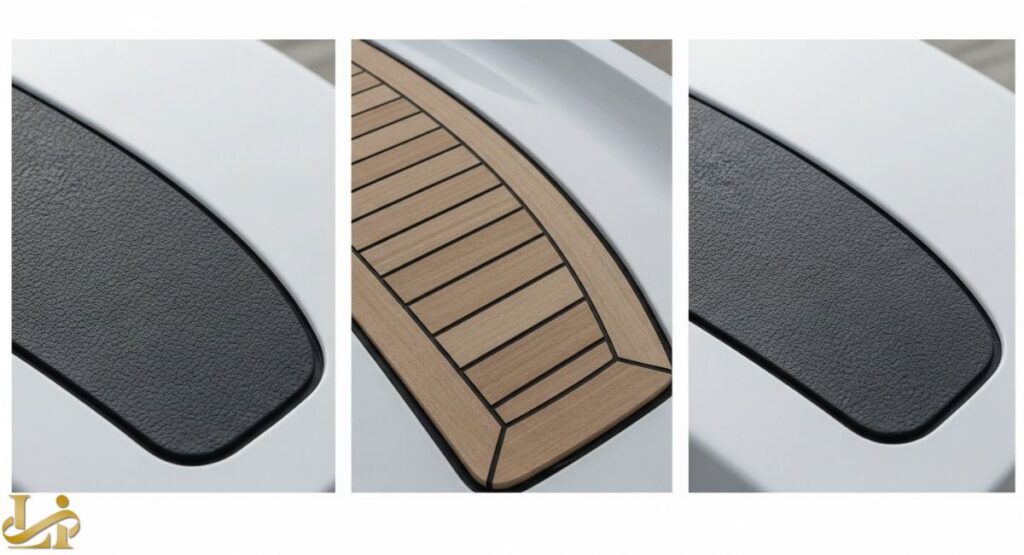
When asking what are the different types of boat decking, you find both natural and modern options.
Woods like teak remain popular, but new modern yacht decking materials include foam, cork, and composites. Each has its own feel, cost, and care needs.
The best wood for yacht decking depends on climate, budget, and style. Some owners prefer the warmth of natural teak, while others choose synthetic teak decking for easier upkeep.
Most buyers weigh appearance against long-term upkeep costs, especially in climates with strong sun and saltwater.
Understanding these choices helps yacht owners match performance with personal preference.
The right deck material not only lasts longer but also keeps your yacht looking stylish trip after trip.
Teak Yacht Decking: The Timeless Standard
Teak decking has been used for centuries. Its natural oils resist water, making it strong against rot.
It also provides natural grip, which works as non-slip decking. This is why many still ask, is teak the best choice for a yacht deck.
Beyond performance, teak has unmatched beauty. Its golden brown color deepens over time, creating a rich look.
Classic luxury yacht deck design almost always features teak because of its heritage and appeal.
For many yacht owners, teak represents more than just practicality—it’s a symbol of tradition and prestige.
Even in a market filled with modern alternatives, teak continues to hold its place as the benchmark of excellence.
Old-Growth vs. Plantation Teak for Yacht Decks
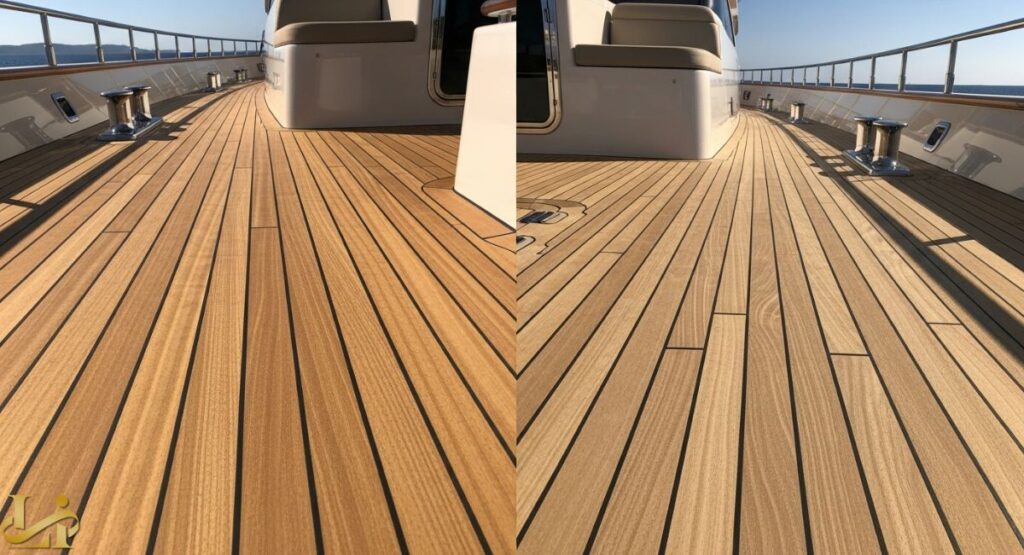
There is a big difference between old-growth teak and plantation teak. Old teak is denser, with tight grain and long-lasting strength.
However, why old teak wood is hard to source lies in over-harvesting and restrictions on logging.
Modern builders now rely on plantation teak. The benefits of plantation teak wood include lower cost and renewable growth.
Still, many point out teak sustainability issues, since plantations may not always follow ethical farming practices.
This shift has encouraged yacht owners to look closely at sourcing and certification.
Choosing FSC-certified teak or verified suppliers ensures better quality control while supporting responsible forestry for the future.
Best Alternatives to Teak Yacht Decks
Not all owners want teak. Many now explore teak alternatives like iroko, mahogany, and oak.
These woods look similar but cost less. Alternatives to teak for yacht decking are popular among first-time yacht buyers in the USA.
For eco-minded owners, sustainable yacht deck materials are key. Using FSC-certified teak or non-tropical hardwoods helps reduce environmental impact while keeping strength and beauty.
Because of this demand, many yacht builders now experiment with mixing natural wood and composite materials to get the best of both worlds—strength and easier upkeep.
As awareness spreads, more yachts in the USA are showcasing greener decks without sacrificing style or performance.
Synthetic Yacht Decking Options: EVA Foam, Cork, and More
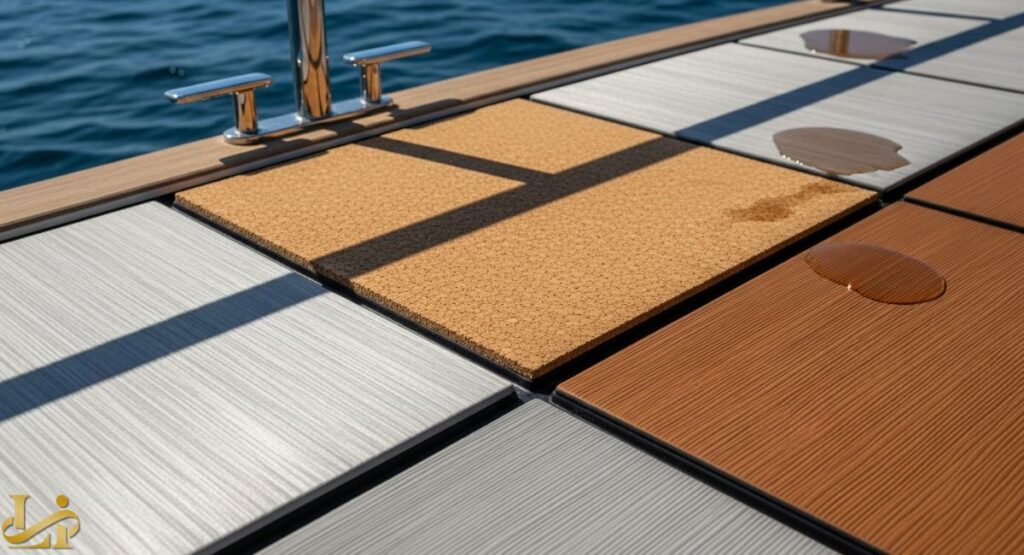
Yacht owners today look at synthetic teak decking because it is easy to clean and cheaper to install.
The advantages of synthetic teak on yachts include less maintenance and resistance to stains.
Other modern picks include EVA foam yacht decking and cork decking for boats. Foam is soft, light, and cool underfoot.
EVA foam vs teak decking is often debated, but foam wins in comfort. Meanwhile, cork as an eco-friendly yacht decking option offers sustainability and insulation.
These newer materials are gaining traction among younger yacht buyers who value practicality over tradition.
They not only reduce upkeep costs but also open doors to creative deck designs with varied textures and finishes.
Chemically Modified Timber for Modern Yacht Decks
Another choice is chemically modified timber. This process makes softwoods stronger, more stable, and better for wet conditions.
Modern yacht decking materials like this last longer and reduce the need for tropical hardwood.
Two known products are Accoya wood decking and Lignia timber. Both are popular in the USA because they resist rot and come from sustainable sources. They cost less than teak yet provide long-term durability.
For many yacht owners, these innovative timbers strike the perfect balance between performance and sustainability.
They also give builders more design flexibility while helping reduce environmental impact, making them a smart option for future yacht decking trends.
How to Maintain and Clean a Yacht Deck
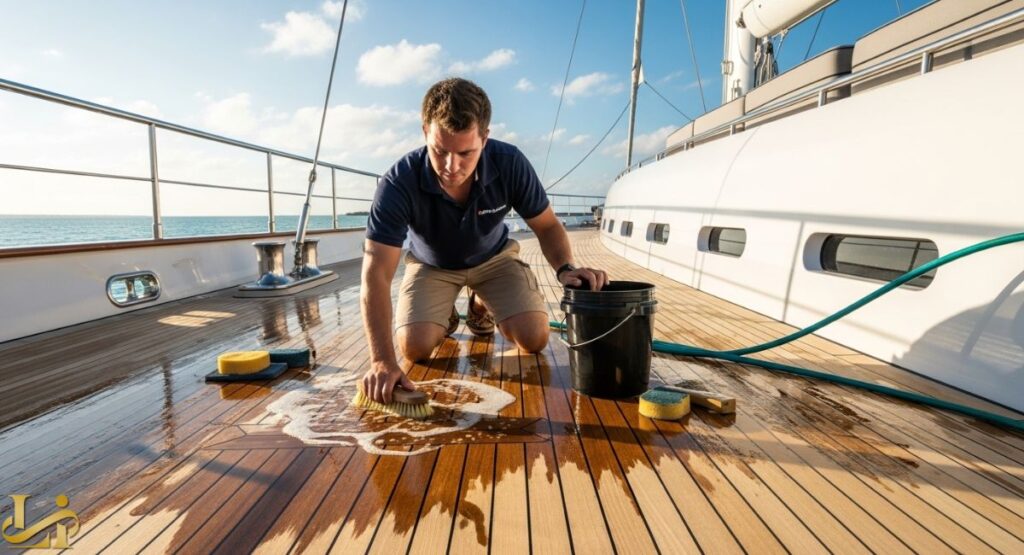
Yacht deck maintenance is vital for safety and looks. Owners must plan regular washing, drying, and checks.
Proper cleaning teak decks involves mild soap and soft brushes. Harsh cleaners damage the wood.
For more expert insights, this teak deck care guide provides practical maintenance tips from yacht professionals.
Tips for cleaning teak decks include rinsing with fresh water and avoiding high-pressure jets. For synthetic options like foam or cork, simple cleaning with water and soap is enough.
Regular inspections also help spot early damage, preventing costly repairs. Applying protective treatments or sealants can extend the life of both natural and synthetic decks, keeping them strong and attractive for years.
Common Mistakes to Avoid with Yacht Deck Care
Many owners make errors when caring for a deck. What not to do when maintaining a yacht deck includes scrubbing across the grain, which damages wood. Using bleach also shortens teak’s life.
Neglecting cracks or loose joints often leads to bigger issues. Over time, this results in costly repairs such as re-caulking yacht decks or full replacement.
To avoid such mistakes, regular inspections and gentle cleaning methods are essential. Investing in professional maintenance once in a while can also save money and extend the overall life of the yacht deck.
Choosing the Right Yacht Deck for Your Vessel
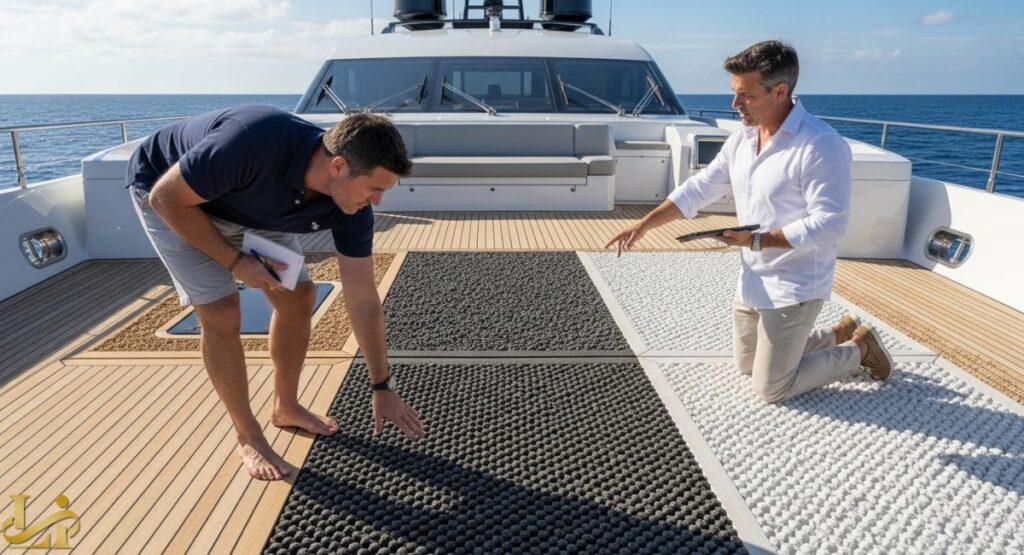
Picking the right yacht decking depends on how the boat is used. A sport yacht may need performance motor yachts with sport decks for speed and grip.
Larger vessels like tri-deck yachts and flybridge layouts focus on space and elegance.
Owners who plan long trips usually go for expedition-style decks built for endurance, while families often prefer multi-hull designs that give them extra space and stability. Each choice should balance cost, care, and lifestyle.
Consulting with yacht designers or builders can also help match the best deck material with the yacht’s purpose. In the end, the right decision enhances both performance and onboard enjoyment
Conclusion
A yacht deck is more than a surface; it is the heart of a vessel. From teak decking to synthetic teak decking, every choice affects comfort, safety, and value.
Whether you pick plantation teak, chemically modified timber, or EVA foam yacht decking, proper care ensures long-lasting beauty.
Regular cleaning, smart care, and avoiding mistakes keep decks safe and strong.
In the end, the right yacht deck combines timeless style with modern durability, helping owners in the USA enjoy the sea without worry.
By understanding materials, maintenance, and design options, yacht buyers can make informed decisions. A well-chosen deck not only enhances performance but also preserves long-term value.
For those who enjoy life on and off the water, yacht houses offer a unique way to extend the luxury lifestyle to shore.
FAQs
What is a deck in a yacht?
A deck in a yacht is the flat outdoor surface where people walk, relax, and enjoy views, while also adding safety and structure.
How much does a yacht deckhand get paid?
A yacht deckhand usually earns around $2,500–$3,500 per month, depending on the yacht’s size and experience.
What is the rear deck of a yacht called?
The rear deck of a yacht is commonly called the aft deck.
What is the lower deck on a yacht called?
The lower deck on a yacht is often called the accommodation deck or cabin deck.
What is a ship’s deck called?
A ship’s deck is generally called the main deck, though names change with function and position.

I write about the world of luxury, from timeless style to premium living, inspiring readers to embrace elegance in everyday life.