For more than a century, Eddie Bauer has been a familiar name in American outdoor clothing. What started in Seattle as a small, practical outfitter grew into a widely recognized brand known for jackets, outerwear, and everyday apparel built for durability rather than trends.
Over time, Eddie Bauer became a staple in malls across the United States and Canada, earning loyalty from customers who valued function and reliability.
That long-standing presence, however, has come under growing strain. Like many traditional retailers, Eddie Bauer has struggled to adapt to changing shopping habits, rising operating costs, and relentless competition from online-first brands.
In recent months, discussions around store closures and financial restructuring have intensified, reflecting the difficult position the company now finds itself in as it attempts to redefine its future.
Eddie Bauer Preparing a Chapter 11 Bankruptcy Filing
According to recent reports, Eddie Bauer’s store operator is preparing to file for Chapter 11 bankruptcy protection as early as January 8, 2026. Chapter 11 allows companies to reorganize their debts while continuing parts of their operations, rather than shutting down entirely.
For Eddie Bauer, the filing appears aimed at preserving the brand while addressing mounting financial pressure.
The company currently operates under Catalyst Brands, a group that oversees several apparel labels facing similar challenges. Executives, including Jarrod Weber and Ken Ohashi, have reportedly explored ways to reduce costs, renegotiate supplier contracts, and accelerate the company’s shift toward e-commerce.
Despite those efforts, losses tied to physical retail locations continued to weigh heavily on the business. Court filings are expected to name major mall landlords, including Simon Property Group and Brookfield Corp., as part of the restructuring process.
A History of Financial Struggles
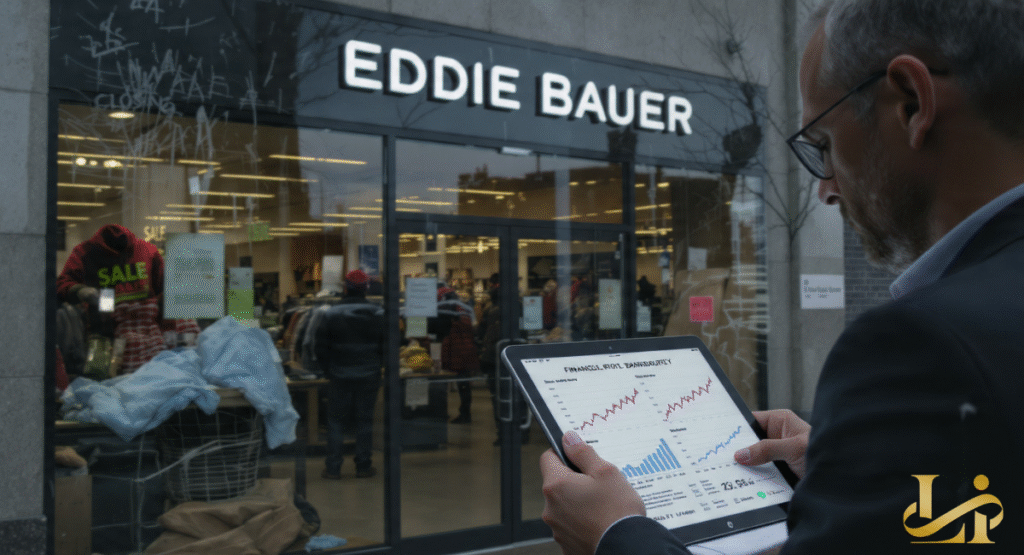
This is not the first time Eddie Bauer has sought bankruptcy protection. The company filed for Chapter 11 in May 2021, citing pandemic-related store closures, supply chain disruptions, and declining in-person sales.
Financial difficulties stretch back even further, with multiple ownership changes and refinancing attempts dating to the early 2000s.
Each restructuring brought smaller store footprints and fewer employees, gradually reshaping how the brand operated. Over time, Eddie Bauer relied more heavily on licensing deals and outsourced production, moving away from the vertically integrated retail model that once defined it.
While the brand name survived, its retail presence steadily diminished across North America.
How Eddie Bauer Lost Momentum
Several overlapping factors contributed to Eddie Bauer’s decline. The company continued expanding its physical footprint even as many shopping malls began losing traffic.
At the same time, online retail gained ground, drawing customers away from traditional stores. Pricing also crept upward, and longtime shoppers began to question whether product quality still matched expectations.
Management decisions played a role as well. Ownership changes involving Authentic Brands Group, PSEB Group, and later Catalyst Brands led to shifting strategies and priorities.
Rather than investing heavily in product innovation or brand differentiation, leadership often focused on short-term financial stability. While competitors adjusted more quickly to changing consumer behavior, Eddie Bauer struggled to remain relevant, particularly with younger shoppers drawn to faster-moving or more digitally native brands.
A 106-Year-Old Retailer Shutters Its Stores
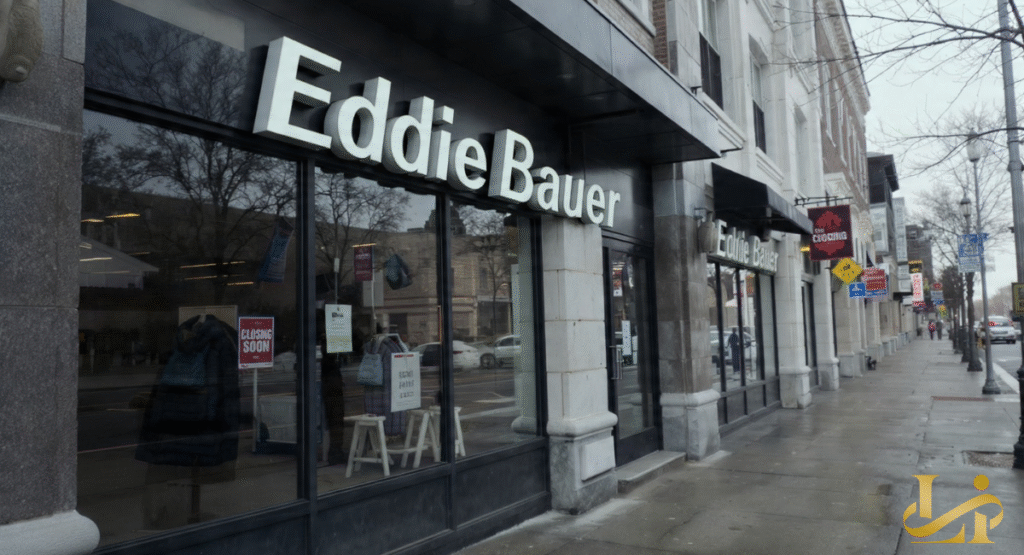
Now, at 106 years old, Eddie Bauer is preparing to close its remaining physical stores. Dozens of mall locations across the United States and Canada are expected to go dark.
For many shoppers, these stores had been a regular stop for years, offering familiar styles and dependable outerwear season after season.
The closures signal a full retreat from traditional brick-and-mortar retail. Going forward, sales will largely take place online, either through Eddie Bauer’s own digital platforms or through wholesale and licensing partners.
This approach mirrors strategies used by brands such as Nautica, Lucky Brand, and Aéropostale, which continue to operate without managing their own store networks.
From Storefronts to Online Sales
E-commerce now sits at the center of Eddie Bauer’s survival plan. Selling online reduces overhead and offers more flexibility in inventory management, but it also brings new challenges.
The digital apparel space is crowded, and building loyalty without physical stores can be difficult.
Company leaders believe the shift positions the brand for more sustainable growth. Licensing agreements, particularly in parts of Asia and Japan, already provide steady revenue.
Still, some critics argue that stepping away from physical retail weakens the emotional connection many customers once had with the brand. Whether online storytelling and marketing can replace that in-person experience remains an open question.
Not an Isolated Case in Retail
Eddie Bauer’s situation reflects a broader pattern playing out across American retail. Over the past decade, once-prominent chains such as JCPenney, Outdoor 5, and Francesca’s have faced similar struggles.
Rising rents, shifting consumer preferences, and online competition have reshaped the economics of operating physical stores.
Retailers that failed to modernize or invest in digital infrastructure often declined more quickly. Others extended their lifespan by streamlining operations or focusing on licensing rather than direct retail.
The message for legacy brands has become increasingly clear: history alone is no longer enough to ensure survival.
Local Impact: Closures in Naperville and Beyond
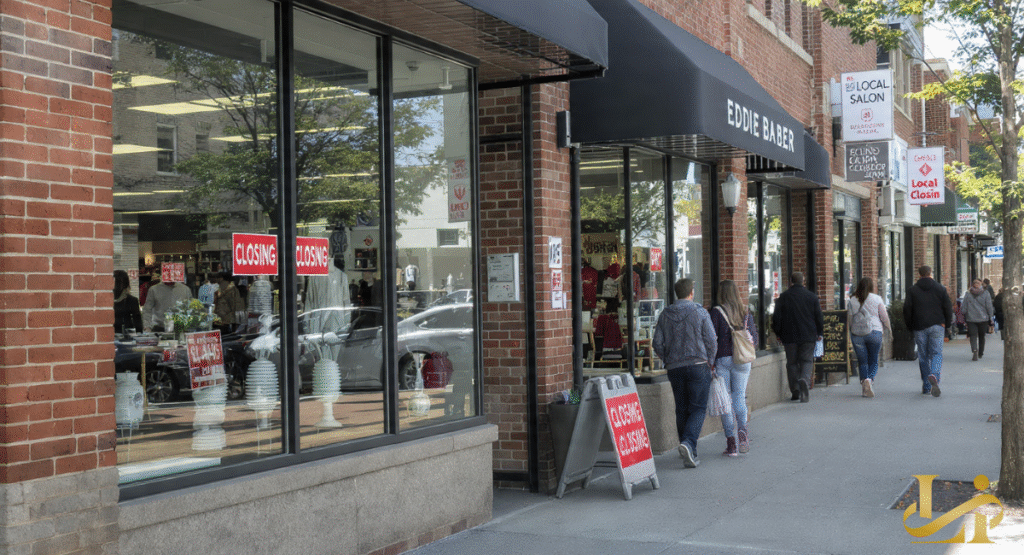
The effects of Eddie Bauer’s pullback are being felt at the local level as well. In Naperville, Illinois, the Eddie Bauer store recently closed alongside Amber Waves Salon.
When well-known tenants leave a shopping center, nearby businesses often feel the impact almost immediately.
Local managers pointed to declining sales and unfavorable lease terms as key reasons behind the closures. Similar scenes are unfolding in communities across the country, where thinning retail corridors reflect broader financial pressures within the industry.
What begins as a national restructuring quickly becomes a local economic issue.
What It Means for Employees and Customers
For employees, the bankruptcy brings uncertainty and anxiety. Store workers face layoffs with limited severance options, while corporate teams may experience restructuring or relocation.
Many employees spent years, or even decades, with the company, making the transition especially difficult.
Customers also face practical concerns. Gift cards may carry expiration deadlines, return policies could change, and loyalty programs may be altered or discontinued.
Shoppers are encouraged to use remaining balances promptly and follow official company announcements. While physical stores are closing, online operations may continue honoring warranties on recently purchased items.
Final Thoughts

Eddie Bauer’s bankruptcy represents a significant turning point for a brand that once helped define American outdoor wear. From its early days in Seattle to its nationwide expansion, the company built a legacy rooted in practicality and trust.
Today, its future depends on how successfully it adapts to a digital-first retail landscape and reconnects with modern consumers in a meaningful way.
FAQs
Does Eddie Bauer honor a lifetime warranty?
Eddie Bauer no longer offers a full lifetime warranty and now provides a one-year warranty against defects on most products.
What’s the return policy for Eddie Bauer?
Returns are generally accepted within 30 days of purchase with a receipt, as long as items are unused and in original condition.
Does Eddie Bauer offer live chat support?
Yes, live chat support is available on Eddie Bauer’s official website during standard business hours.
Is Eddie Bauer going under?
The brand itself is not disappearing, but its store operator is preparing a Chapter 11 filing that will result in widespread store closures while online and wholesale operations continue.
What is the Eddie Bauer controversy?
Recent controversy focuses on store closures, bankruptcy plans, and changes to warranties, which have disappointed some longtime customers.

I write about the world of luxury, from timeless style to premium living, inspiring readers to embrace elegance in everyday life.