The tragic Kauai Helicopter Crash near Kalalau Beach in Kauai has left the island and visiting tourists in shock, claiming three lives and injuring two others. The accident involved a McDonnell Douglas MD 500 helicopter operated by Airborne Aviation, which has since suspended all tour flights indefinitely.
Emergency teams faced a challenging rescue along Hawaii’s remote North Shore, highlighting the difficulty of responding to incidents in such rugged areas. Authorities, including the FAA and NTSB, are investigating the cause. The incident raises urgent questions about helicopter tour safety and how visitors can enjoy Hawaii’s breathtaking scenery responsibly.
Victims Identified and Personal Details
Authorities quickly identified the victims of the Kauai helicopter crash. Margaret Rimmler, 65, and Patrick Haskell, 59, were from Massachusetts and visiting Kauai for a scenic tour. The third victim, a 40-year-old woman, has not been publicly named to respect her family’s privacy. The two survivors are receiving treatment at Wilcox Medical Center, and their identities are being kept private.
Officials also shared what the passengers were experiencing before the Kauai Helicopter Crash. Many tourists choose Airborne Aviation for the stunning views of the Na Pali Coast, which makes this tragedy even more heartbreaking. For locals and visitors alike, the incident serves as a sobering reminder of how fragile life can be, especially during adventure tourism. Community members have called for stronger safety checks and increased awareness for travelers in remote areas.
Kauai Helicopter Crash Location and Timeline
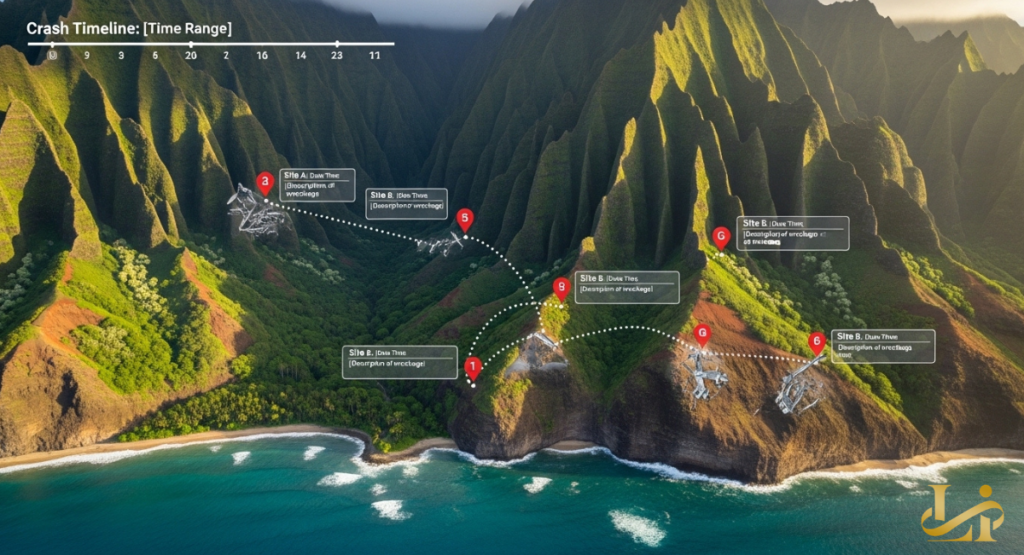
The timeline at top anchors key moments between departure and the final impact zone near the shore.
The Kauai Helicopter Crash occurred near Kalalau Beach, a remote area along the Na Pali Coast known for its dramatic cliffs and rugged shoreline. Rescue efforts were complicated by the isolation of the area and harsh weather, including strong winds and rain. A text-to-911 alert was reportedly sent at approximately 3:45 p.m., and first responders including ocean safety officers and helicopters from other operators arrived by 4:21 p.m.
Eyewitnesses described bystanders rushing to assist, performing CPR before professional help arrived. The helicopter, carrying one pilot and four passengers, crashed in a busy area where up to ten people, including campers, were nearby. This sequence of events shows how quickly accidents can escalate and highlights the need for strict safety measures during scenic flights.
Helicopter Rescue Efforts
Multiple agencies worked together to rescue victims of the Kauai helicopter crash. Kauai Fire Chief Michael Gibson reported that rescuers faced dangerous terrain and harsh weather while reaching trapped passengers. Teams from Jack Harter Helicopters and Blue Hawaiian Helicopters helped with logistics and manpower, and the U.S. Coast Guard Station Kauai provided critical water rescue support. Bystanders played a key role, performing CPR and guiding responders to survivors.
The rescue of the trapped passenger took more than an hour, underscoring the risks of flying in remote areas. Officials praised the coordination among agencies, noting that the operation was successful despite the challenging conditions. A breakdown of the rescue effort illustrates the teamwork involved:
| Agency/Team | Role in Rescue Operation | Key Action Taken |
|---|---|---|
| Kauai Fire Department | Initial response | Provided first aid and evacuation |
| Jack Harter Helicopters | Support and verification | Assisted in locating survivors |
| Blue Hawaiian Helicopters | Manpower and logistics | Landed on beach to aid rescue |
| U.S. Coast Guard Station Kauai | Water rescue and transport | Deployed boats and personnel |
| Bystanders | Immediate first aid | Performed CPR and helped trapped |
These heroic efforts show the importance of Kauai’s emergency teams in saving lives during such emergencies.
Cause and Investigation

The digital overlay signals technical analysis focused on mechanical and structural factors.
The cause of the Kauai helicopter crash remains under investigation. Both the FAA and NTSB are reviewing what led to the McDonnell Douglas MD 500 helicopter’s crash. Doug Frowning of Airborne Aviation stated that the company is fully cooperating with authorities but cautioned that speculation would be premature.
Investigators are examining weather conditions, mechanical issues, and operational protocols, including flight records, maintenance logs, and pilot training. While the inquiry continues, the Kauai Helicopter Crash has drawn attention to the safety standards of helicopter tours and the need for stricter oversight along Hawaii’s remote coastlines. Future recommendations may include revised flight paths, enhanced pilot training, and improved emergency procedures.
Impact on Tour Operations
Airborne Aviation immediately suspended all tours following the Kauai Helicopter Crash, prioritizing the victims’ families and updates from the investigation. The company allowed only one helicopter to fly temporarily for conservation work, reflecting a focus on safety over business.
The incident has also affected tourism in Kauai. Visitors planning helicopter tours are reconsidering their options, and local tourism authorities are reviewing safety measures. Other tour operators are reinforcing their emergency procedures, showing the close cooperation in the aviation tourism industry. Airlines and operators may adopt stricter standards to prevent similar tragedies in the future.
Na Pali Coast Safety Concerns
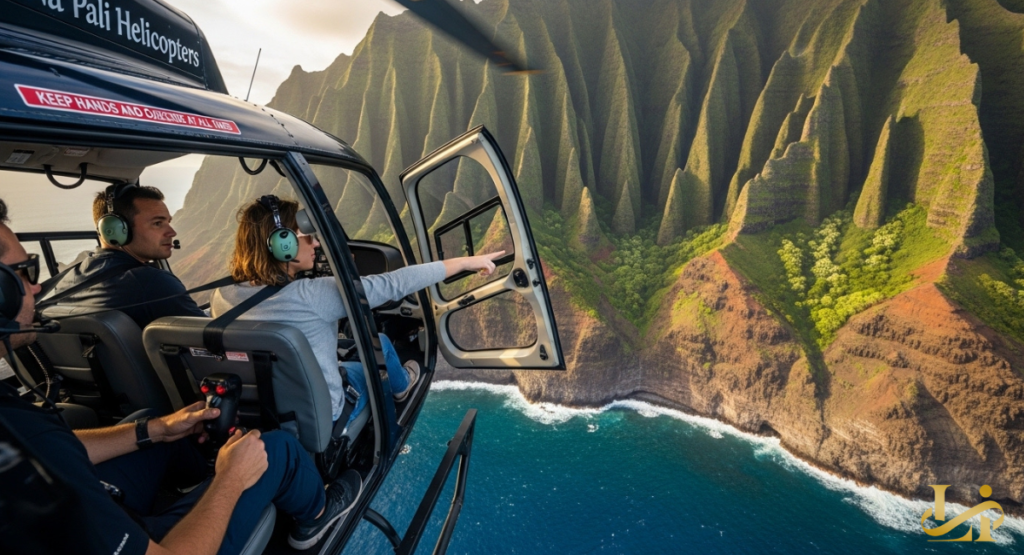
The Na Pali Coast is known for its challenging terrain and unpredictable weather, factors that have contributed to multiple helicopter accidents over the past decade. Pilots must navigate cliffs, ocean spray, and narrow landing zones, making safety a constant concern.
Travelers should be aware of the risks when booking tours in remote regions. FAA and local authorities advise checking weather conditions, verifying pilot experience, and carefully following pre-flight instructions. Notable past incidents highlight the need for ongoing vigilance:
| Year | Operator | Outcome |
|---|---|---|
| 2018 | Blue Hawaiian Helicopters | Minor injuries, emergency landing |
| 2020 | Airborne Aviation | Mechanical failure, no fatalities |
| 2024 | Jack Harter Helicopters | Rough landing, minor injuries |
These past events underscore the importance of continuing safety measures for helicopter tours.
Broader Hawaii Travel Safety
Hawaii’s popularity as a tourist destination makes travel safety crucial. The Kauai helicopter crash highlights the potential dangers of adventure tourism, from scenic flights to remote hiking trails. Visitors are advised to research operators, confirm insurance coverage, and follow local safety guidelines.
While accidents in Hawaii are rare, they can have severe consequences. Lessons from theKauai Helicopter Crash may help improve safety standards across the islands, allowing tourists to enjoy Hawaii’s beauty without unnecessary risk. Authorities stress preparation, attentiveness, and caution as key factors for safe travel.
Media Coverage and Public Reaction
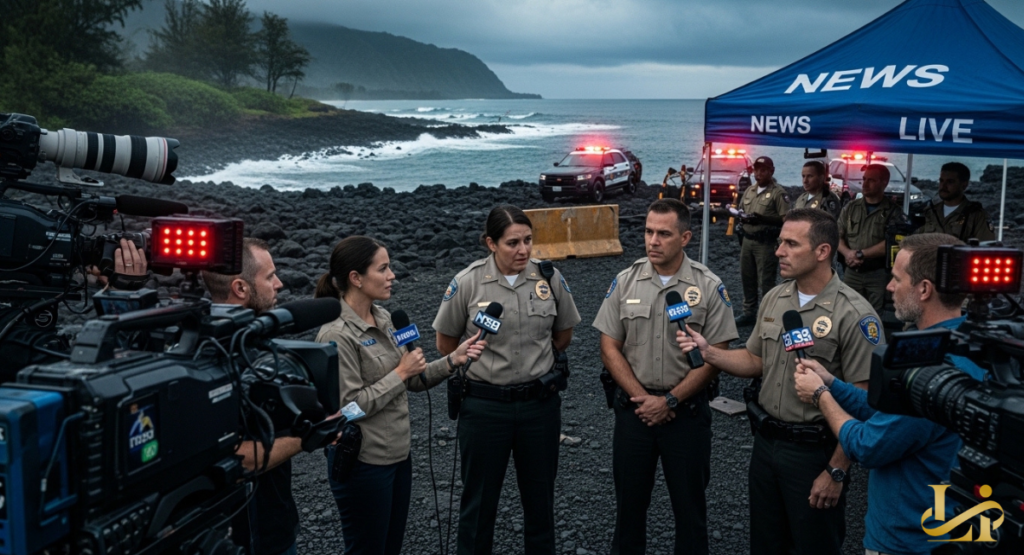
Multiple news crews capture statements during an evening briefing by emergency officials.
Local news outlets, including Hawaii News Now, have provided extensive coverage of the Kauai helicopter crash, with live updates, interviews, and video footage. Social media quickly amplified the story, with the public expressing sympathy for the victims and admiration for first responders. Kauai Mayor Derek Kawakami praised the rescue teams for their bravery under extreme conditions.
The accident has also sparked broader discussions about helicopter safety and the responsibilities of companies operating in high-risk areas. Concern over the frequency of accidents along the Na Pali Coast has led to calls for stricter oversight, showing how public engagement can influence policy and industry standards.
What’s Next
The investigation into the Kauai helicopter crash is ongoing. FAA and NTSB teams are examining flight data, maintenance records, and weather conditions to determine the cause. Airborne Aviation has pledged full cooperation and continues to support the victims’ families.
Authorities may introduce new safety rules, revise tour operations, and strengthen emergency readiness in remote areas. For tourists, understanding these changes will be essential for future planning. The industry hopes that lessons from this tragedy will prevent similar accidents and ensure Hawaii’s stunning landscapes can be safely enjoyed.
FAQS
Why did the Kauai Helicopter Crash?
The cause of the Kauai helicopter crash is still under investigation by the FAA and NTSB, including factors such as weather and mechanical issues.
How many tourist helicopters have crashed in Hawaii?
Several tourist helicopters have crashed in Hawaii over the past decade, particularly along the Na Pali Coast, though most incidents involved minor injuries.
Is a helicopter tour safe in Kauai?
Helicopter tours in Kauai are generally safe, but accidents like this remind travelers to check pilot experience, weather conditions, and safety protocols before flying.
Who died in the helicopter crash in Hawaii?
Margaret Rimmler, 65, and Patrick Haskell, 59, were confirmed dead, along with a 40-year-old woman whose name has not been released.
Was Rebecca Lobach the pilot of the Black Hawk?
No, Rebecca Lobach was not involved in this crash or any related helicopter incident.

I write about the world of luxury, from timeless style to premium living, inspiring readers to embrace elegance in everyday life.