The conversation around Gasoline E15 is heating up across the United States as policymakers, farmers, and drivers prepare for the upcoming fuel season. This ethanol-blended fuel contains 15% ethanol, offering a cleaner alternative to regular gasoline while supporting American agriculture.
With the E15 fuel waiver announced for summer 2026, more stations may start offering this renewable option, which could help lower fuel prices nationwide. Farmers, especially in Iowa, are optimistic about higher demand for their crops, while the biofuel industry in the USA expects production growth.
Drivers and policymakers alike need to understand vehicle compatibility, year-round sales, and environmental effects of Gasoline E15.
The Feds Plan To Start Diluting Gasoline E15 This May: Explained
Starting May 2026, the federal government will allow Gasoline E15 sales nationwide during the summer months. The policy aims to ease rising oil costs and stabilize fuel markets. By encouraging alternative fuels like Gasoline E15, the government hopes to help American farmers while offering drivers a cheaper, cleaner option.
Historically, summer waivers have been temporary, but this year marks a more organized push to make Gasoline E15 more widely available. Environmental groups and small refineries have raised concerns about smog, particularly at ground level, but supporters emphasize the potential benefits.
The policy also ties into U.S. goals for cleaner fuels and reduced carbon emissions. Policymakers argue it will boost rural economies and strengthen agricultural fuel demand. Critics, however, warn about engine risks in vehicles that are not compatible with Gasoline E15. This initiative reflects a careful balance between economic growth, environmental considerations, and energy independence.
Quick Download on the May 2026 E15 Gas Waiver

Digital dashboards display approval status, emissions charts, and regulatory metrics for stakeholder briefing.
The emergency fuel waiver of 2026 authorizes Gasoline E15 across the country, except in states with stricter summer regulations. This means more gas stations will offer the 15% ethanol fuel blend, which could reduce costs at the pump. The waiver runs through the high-demand summer months, allowing both drivers and gas stations to prepare for potential year-round sales.
| Key Detail | Explanation |
|---|---|
| Waiver Start | May 2026 |
| Ethanol Blend | 15% |
| Nationwide Access | Yes (except restricted states) |
| Policy Purpose | Reduce fuel costs, support farmers |
Drivers gain access to more affordable, cleaner fuel, while farmers enjoy a bigger market for their crops. Leaders like Mark Mueller, president of the Iowa Corn Growers Association, have long supported year-round Gasoline E15 legislation.
‘Another Band-Aid’: Farmer Calls E15 Fuel Waiver Announcement a Temporary Fix
Many farmers see the waiver as short-term relief rather than a permanent solution. Mark Mueller, a farmer from Waverly, Iowa, highlighted how rising fertilizer prices make it tough for farmers to stay profitable. “Farmers haven’t seen a win in a long time,” Mueller said. While Gasoline E15 helps, it does not fully offset high production costs.
The waiver also sparks debate in the biofuel industry. Large ethanol producers support it, while small refineries argue it may affect their operations. Mueller dismissed these worries as a “smokescreen,” pointing out that previous summer waivers caused no major disruptions. The discussion illustrates the delicate balance between supporting agriculture, stabilizing fuel markets, and addressing industrial concerns about Gasoline E15.
‘Boutique Fuel’ and ‘Unleaded 88’ Explained
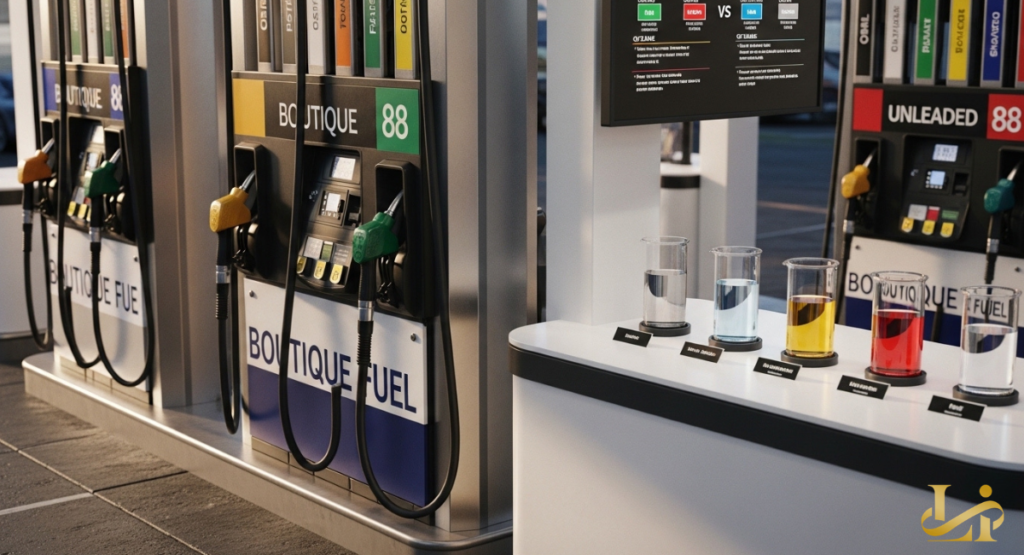
Beakers with clear, blue, amber, red, and pale liquids visualize formulation differences for customers.
Many drivers are confused about how Gasoline E15 compares to other fuel types. While standard gasoline contains about 10% ethanol, Gasoline E15 has 15%. Some stations label blends as Boutique Fuel or Unleaded 88. These fuels are designed for high-efficiency vehicles and may vary slightly in ethanol content.
| Fuel Type | Ethanol % | Recommended Vehicles |
|---|---|---|
| Regular Gasoline | 10% | Most vehicles |
| E15 | 15% | Approved vehicles only |
| Unleaded 88 | 8–10% | High-efficiency cars |
Choosing the right fuel affects car performance and environmental outcomes. Gasoline E15 can reduce carbon emissions and make better use of renewable fuels, although in hot climates, smog concerns may persist. Drivers should always check compatibility, especially with older engines or specialty cars.
The Context for Your Car
Before filling up, it’s essential to understand which cars can safely use Gasoline E15. Most modern vehicles are compatible, but older engines may have issues. Car manuals provide guidance, and many gas stations clearly mark E15-compatible pumps.
Drivers should also be aware of local fuel regulations. Hot states may limit Gasoline E15 during summer to prevent smog, and stations must adjust infrastructure to safely handle ethanol blends. Checking your car manual and monitoring local fuel announcements can help ensure safe use.
Climate Impact of E15 Gasoline
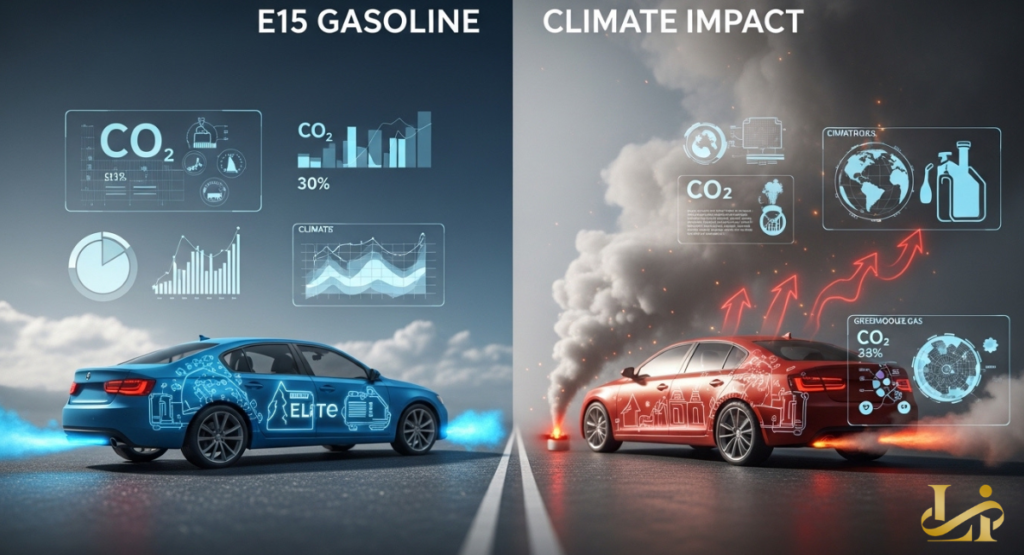
Switching to Gasoline E15 offers real environmental benefits. Higher ethanol content reduces carbon monoxide and greenhouse gas emissions, supporting cleaner energy goals. Ethanol’s renewable nature helps the U.S. meet sustainability targets. Studies indicate that using ethanol-blended gasoline like Gasoline E15 can cut carbon output by 10–20% compared to standard gasoline.
While benefits are clear, ground-level smog in hot climates remains a concern. Balancing these climate benefits with safety regulations is a key challenge for policymakers.
Market Trends and Industry Reactions
The introduction of Gasoline E15 has sparked mixed reactions. Large refineries support it to help reduce fuel prices, while smaller refineries raise concerns about infrastructure costs. Consumer interest is rising as drivers notice lower prices at compatible stations. If successful, the waiver could encourage year-round Gasoline E15 sales.
Pricing data suggests ethanol blends can lower pump costs slightly while supporting rural economies. Analysts expect demand for Gasoline E15 to continue growing as legislation supports renewable energy and driver awareness increases.
More in News: Latest Updates on Fuel Policies

Charts, state maps, and talking points frame a data-heavy discussion among energy correspondents.
Recent announcements from the Environmental Protection Agency confirm broader access to Gasoline E15 across the U.S. Lawmakers like Representative Ashley Hinson continue pushing for permanent year-round legislation in Iowa. Political shifts and midterm elections influence farmer sentiment, with both parties considering the economic impact on rural communities.
Looking ahead, support for biofuel producers may expand to other states, and federal incentives could encourage more renewable energy. Trade deals and international ethanol markets, particularly with China and India, remain important for sustaining agricultural fuel demand and U.S. energy independence.
The Biggest Car News and Reviews, No BS
Automotive experts report that cars built for ethanol blends perform smoothly with Gasoline E15 and emit less pollution. Older vehicles may experience reduced efficiency if not compatible. Drivers who use Gasoline E15 correctly usually see little difference in performance, while benefiting from lower emissions and potential fuel savings.
FAQS
Can you put E15 gas in a regular car?
Gasoline E15 can only be used in vehicles made after 2001. Older cars risk engine damage.
Are E85 and E15 the same thing?
No. E85 contains up to 85% ethanol, while Gasoline E15 only contains 15%.
Is E15 gas the same as 89 in the USA?
No. E15 refers to ethanol content, whereas 89 is an octane rating.
What gas stations carry E15 gas?
Many major chains and local stations, especially in the Midwest, now offer Gasoline E15, though availability varies by state.
Is E15 the same as 87 fuel?
Not exactly. Gasoline E15 usually has an octane rating of 87, but its defining feature is the 15% ethanol blend.

I write about the world of luxury, from timeless style to premium living, inspiring readers to embrace elegance in everyday life.