In a surprising turn of events, thieves stole more than 12 tons of KitKat bars in Europe, shining a spotlight on the rising issue of cargo theft in the food industry. The stolen Nestlé chocolate bars were on their way from a factory in central Italy to Poland, disrupting a key distribution route for one of the world’s most beloved chocolates. As criminals become more inventive, companies are finding it increasingly difficult to protect shipments carrying high-value goods.
The audacious heist has grabbed the attention of chocolate fans, authorities, and industry experts worldwide. From the sheer scale of the theft to its potential impact on consumers and retailers, the stolen KitKat bars case underscores the importance of security, tracking, and vigilance across global supply chains today.
Details of the KitKat Chocolate Heist
The theft occurred while a truck was transporting chocolate from Italy to Poland. According to Nestlé, the truck left a central Italian factory carrying more than 400,000 KitKat bars but never reached its intended destination. Investigators confirmed that all the stolen bars are traceable thanks to batch number tracking, allowing Nestlé to monitor if any bars appear on the market.
Experts describe the heist as one of the largest in recent European history. With such large-scale chocolate thefts becoming more common, companies are rethinking how they transport high-demand products safely. Even trusted delivery routes can become vulnerable, showing how sophisticated criminals are targeting high-value food shipments.
KitKat and Nestlé Respond to the Theft

projecting warehouse maps, alerts, and inventory charts in midair.
In response to the incident, a KitKat spokesperson confirmed the theft and reassured consumers that measures are being taken to address the situation. Nestlé emphasized that it is working closely with supply chain partners, law enforcement, and the Transported Asset Protection Association (TAPA) EMEA to investigate the case.
Though the story might seem almost comical, Nestlé highlighted that thefts like this have serious consequences for revenue and consumer trust. The company also reminded the public of the importance of on-pack batch numbers, urging anyone who comes across stolen bars to report them.
How the Heist Happened
Preliminary reports suggest that the thieves studied the supply chain in detail to steal as much chocolate as possible. The truck, loaded with more than 12 tons of KitKat bars, disappeared without a trace, revealing gaps in chocolate distribution security. Investigators are analyzing the route, stops, and possible insider involvement to piece together how the theft occurred.
Experts point out that cross-border shipments, such as the Italy-to-Poland route, face extra risks because of the many checkpoints and transfers along the way. This heist reflects a growing trend of food transport theft, which often targets high-demand items like chocolate, coffee, and alcohol.
Impact on the Chocolate Industry
The incident has notable implications for the confectionery industry. First, it disrupts supply chains, causing delays for retailers across Europe. Second, it forces companies to invest more in security measures. Some analysts warn that incidents of this size could have a minor impact on chocolate prices, particularly for premium brands like KitKat.
Repeated thefts threaten manufacturer profits and create distrust in shipping and logistics. Chocolate shipments now face stricter monitoring, with companies adding GPS tracking and additional insurance coverage. Chocolate theft is becoming more sophisticated, and brands must adapt quickly to protect their products and reputation.
Police and Investigation Updates
Law enforcement agencies are actively investigating the KitKat theft. Local authorities, working with European partners, are tracing the distribution route to identify suspects. No arrests have been reported yet, but investigators are exploring both professional crime networks and possible insider involvement.
Organizations like the International Union of Marine Insurance (IUMI) and TAPA EMEA are assisting in the investigation, as these groups track rising cargo theft worldwide. Authorities are reviewing surveillance footage, transport logs, and batch tracking data to locate the stolen bars.
Previous Chocolate Heists Around the World

from sack-laden warehouse raids to high-speed chases and container break-ins.
While chocolate thefts are rare, they are not unheard of. In previous European cases, criminals targeted smaller shipments from trucks, warehouses, or retail stores. One notable incident in 2019 involved a shipment of Swiss chocolate, where hundreds of kilograms were stolen from a factory distribution center.
Looking at past cases helps put the KitKat heist into perspective, revealing a trend of increasingly sophisticated thefts targeting high-demand food products. Experts suggest that studying these incidents can help companies anticipate and prevent similar cross-border theft attempts in the future.
KitKat Fans React to the Theft
The theft has sparked reactions from fans around the world, especially on social media. Some joked about the thieves’ “sweet tooth,” while others expressed concern about potential shortages. Memes featuring stolen KitKat bars quickly circulated, showing just how much people love the brand.
Fans’ responses demonstrate that chocolate theft impacts more than just the supply chain—it can also affect public perception of the brand. Engagement online shows how emotionally attached consumers are to KitKat, making any news about the brand widely shared and discussed.
Nestlé’s Measures to Prevent Future Thefts

combining drones, biometric access, and real-time digital surveillance.
Following the incident, Nestlé is introducing stricter security measures along chocolate distribution routes. Steps include enhanced GPS tracking, more thorough vehicle inspections, and close coordination with security groups like TAPA EMEA. Batch tracking is also being reinforced to quickly identify any stolen bars in circulation.
These steps are intended to reduce vulnerabilities in food transport and reassure consumers. Nestlé is also training supply chain partners to spot suspicious activity, making future thefts harder to pull off. The company’s proactive approach demonstrates its commitment to protecting both its products and its reputation.
Fun Facts About KitKat Production and Popularity
KitKat is sold in over 100 countries, with billions of bars produced every year. Its famous slogan, “Have a Break, Have a KitKat,” has made it one of the most recognizable chocolate brands globally. Each bar comes with a batch number, which proved invaluable during the investigation of the chocolate heist.
The brand’s global popularity has inspired limited editions, collaborations, and seasonal flavors. Nestlé produces millions of KitKat bars annually, showcasing the scale of its supply chain and the dedication of its worldwide fanbase.
What This Means for Consumers and Retailers
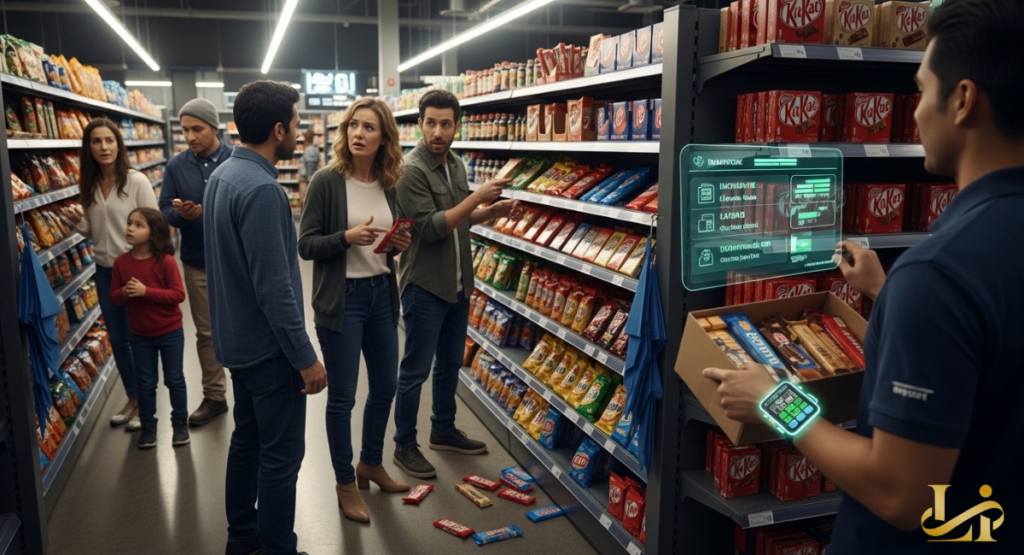
as staff manage stock and answer questions in a busy store.
For consumers, the theft is unlikely to cause immediate shortages, though some local disruptions may occur. Retailers may see delays in restocking certain KitKat bars, and minor price adjustments could appear due to increased shipping and security costs.
For the chocolate industry, the theft highlights the importance of strong supply chain security and risk management. Consumers can be assured that Nestlé is actively tracking the stolen bars, and future shipments will be more secure. Both retailers and chocolate fans should stay updated on developments, especially concerning cross-border thefts like this one.
Table: Key Facts About the KitKat Heist
| Detail | Information |
|---|---|
| Total KitKat bars stolen | 413,793 bars |
| Total weight | 12 tons |
| Truck route | Central Italy factory to Poland |
| Investigating bodies | Local authorities, IUMI, TAPA EMEA |
| Tracking method | On-pack batch numbers |
| Company response | Nestlé and KitKat spokesperson statements |
| Industry impact | Supply chain security upgrades, production monitoring |
This KitKat chocolate heist serves as a cautionary tale about European confectionery theft and the vulnerability of high-value shipments. From fan reactions to law enforcement investigations and Nestlé’s response, the incident touches every part of the chocolate supply chain, emphasizing the importance of cargo theft prevention and batch tracking in today’s global market.
FAQS
Why is KitKat being discontinued?
KitKat is not being discontinued; the brand continues worldwide, though some limited editions may occasionally end.
Why is KitKat so famous in Japan?
KitKat is popular in Japan due to its unique flavors, local marketing campaigns, and the lucky “kitto katsu” pun, which means “you will surely win.”
What is going on with KitKats?
Recently, more than 12 tons of KitKat bars were stolen in Europe, drawing global attention and raising concerns about supply chain security.
Where were the 12 tons of KitKats stolen?
The stolen bars were taken from a truck traveling from central Italy to Poland.
What is the oldest candy bar still sold today?
The oldest candy bar still sold today is the Hershey’s Milk Chocolate bar, introduced in 1900.

I write about the world of luxury, from timeless style to premium living, inspiring readers to embrace elegance in everyday life.