Keeping your floors clean and shiny isn’t just about appearances—it’s about protecting your investment.
Using floor buffers for buffing is a key floor maintenance procedure that removes dirt, scuff marks, and scratches while restoring your floor’s natural shine.
Whether you have hardwood floors, tile floors, or mixed surfaces, the right floor buffer can make a huge difference.
From heavy-duty commercial floor buffers to cordless, lightweight machines, mastering the use of floor buffers ensures professional-quality results at home or in your facility.
In this ultimate guide, we’ll cover everything from how to use a commercial floor buffer to choosing the best floor pad, tips for maintenance, and top recommendations for every budget and floor type.
We’ll also explore common mistakes to avoid, advanced buffing, polishing, and waxing techniques, and ways to extend the life of your floor finish.
By the end of this guide, you’ll have the confidence to select the perfect floor buffer, tackle tough cleaning jobs, and keep your floors looking spotless and well-maintained for years to come.
What is a Floor Buffer?
A floor buffer is a machine that rotates a floor pad or floor brush to clean, polish, and maintain floors.
Most commercial floor buffers operate at high-speed rotation, typically between 175-300 RPM, and can be fitted with various abrasive pads depending on the floor type and cleaning task.
Floor buffers are versatile machines that can clean hardwood and tile floor cleaning surfaces effectively.
Different types of floor buffers include corded, cordless, multi-purpose floor cleaner machines, and heavy-duty commercial floor scrubbers.
Each type is designed for specific purposes. Cordless models, for instance, offer freedom and flexibility, while heavy-duty options are perfect for large commercial areas.
Choosing the correct floor buffer ensures effective floor sanding and finishing, reducing the risk of floor scratches and damage.
Regular maintenance and using the right cleaning chemical and spray buffing solution can further enhance performance, prolong the life of your floor buffer, and keep floors looking professionally polished every day.
How To Use a Commercial Floor Buffer
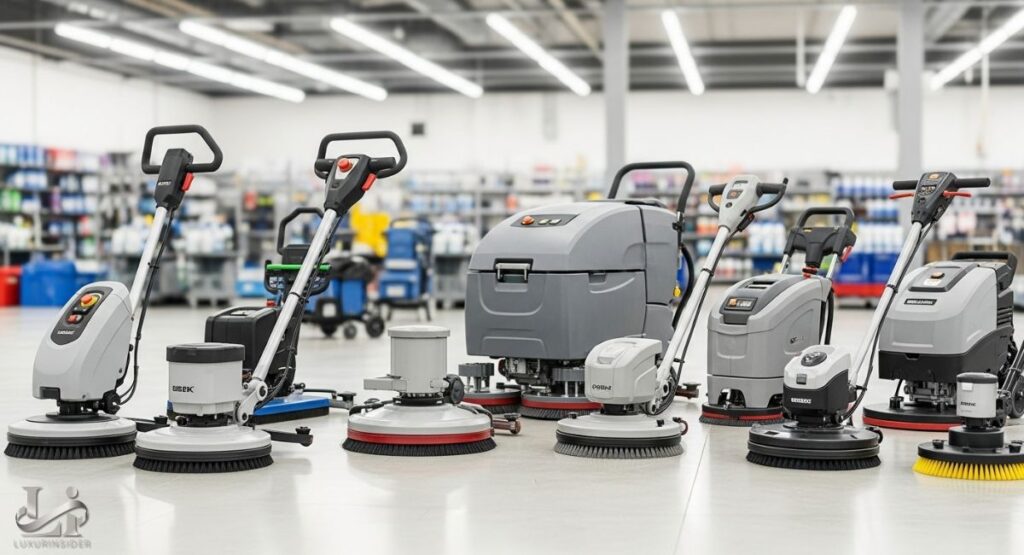
Before you start with a commercial floor buffer, it’s important to prepare properly and get familiar with how the machine works.
Begin with floor preparation and chemical selection, including a dust mop to remove loose debris and a wet vacuum for wet cleaning.
Select the correct cleaning chemical or stripping chemical based on your flooring type. A spray buffing solution can help restore shine on worn surfaces.
After prepping, attach the proper floor pad or floor brush and ensure proper buffer operation. Begin in a small area to practice buffing technique and gradually move across the floor in overlapping motions.
Maintaining a steady rhythm prevents streaks, uneven polishing, or accidental damage.
By following these steps, floor buffers can deliver professional results, restoring the floor finish and removing scuff marks efficiently.
Regular use also minimizes long-term wear, keeps hardwood floors and tile floors looking new, and maximizes the effectiveness of your floor maintenance procedure over time.
Holding and Positioning the Buffer
Holding and positioning floor buffers is critical for effective floor cleaning.. Grip the handle at about waist height to control the floor pad and maintain balance.
Shifting weight forward or backward will guide the machine in different directions, while steady motion prevents floor scratches and uneven polish.
Positioning also affects buffing, polishing, and waxing. Always use overlapping passes and avoid swinging the machine across the grain of hardwood floors.
For tile floors, ensure the floor brush reaches grout areas for thorough cleaning.
Proper handling guarantees a smooth, uniform shine every time. Mastering this technique also reduces operator fatigue, improves efficiency, and ensures consistent results with both commercial floor buffers and home units.
Choose the Best Pad and Abrasive Combination for the Job
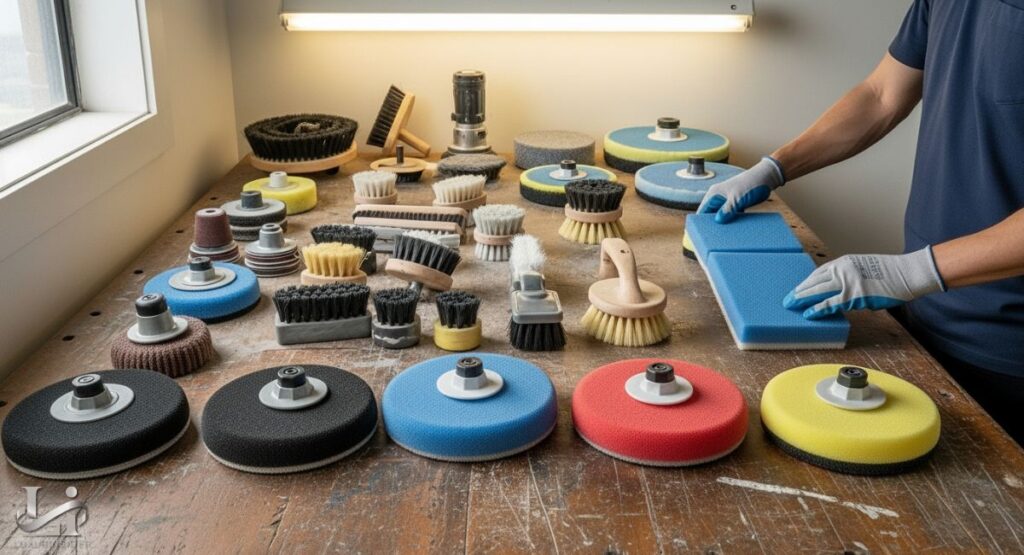
Choosing the correct floor pad or abrasive pad is essential. For everyday cleaning, a red pad works well on hardwood floors, while a white pad is ideal for spray buffing solutions.
Black pads are aggressive and suitable for stripping chemical applications. The right pad ensures floor sanding and finishing is smooth and effective when using floor buffers.
Floor sanding grit sequence is important for buffing hardwood floors. Start with coarse grit for scratches and move to finer pads to polish.
For tile floors, brushes are preferred for deep cleaning grout lines. Always test new pads on a small area before full use to avoid damage.
Using the proper pad also enhances the lifespan of your floor buffer and maintains a consistent floor finish across all surfaces.
Things to Consider When Shopping for the Best Floor Buffers
When shopping, consider your flooring type, speed, and motor power. A high-speed floor burnisher is ideal for large commercial areas, while a budget floor scrubber is perfect for small homes.
Cordless options like cordless electric mop provide freedom, whereas corded floor buffers offer uninterrupted power.
Other factors include machine weight, pad compatibility, and versatility. A multi-purpose floor cleaner machine can clean hardwood and tile floors without switching equipment.
Always consider long-term maintenance and floor maintenance tips, ensuring your investment lasts and performs efficiently. For additional insights, check out this expert guide from CleanLink on floor care best practices.
The right floor buffers prevents scratches, gives you an even polish, and helps your floors stay in great shape over time.
The Best Floor Buffers: Reviews & Recommendations
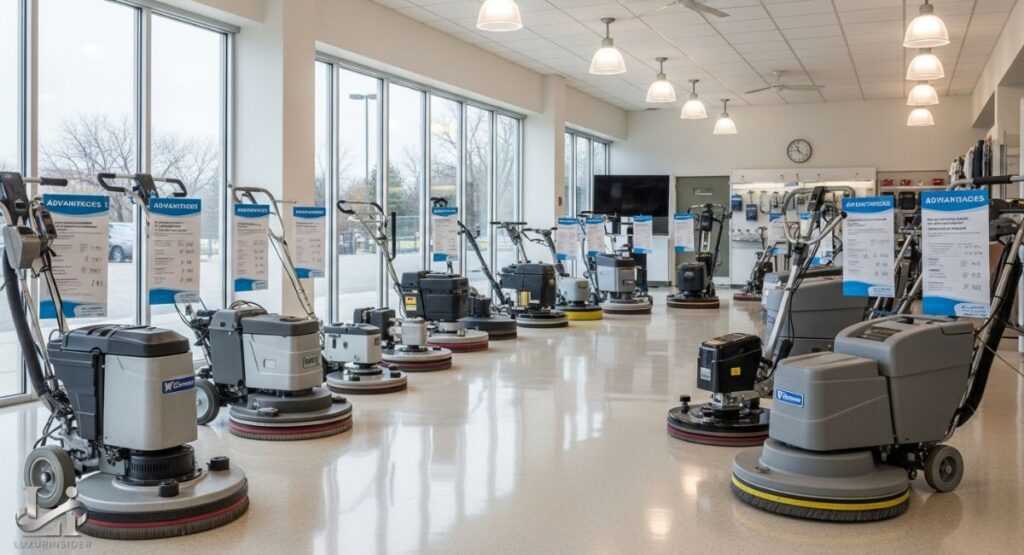
Finding the right floor buffer depends on your needs. The best overall machine is versatile, powerful, and suitable for hardwood floors and tile floors.
Best cordless options like the Gladwell Cordless 3-in-1 Spinner are excellent for flexibility, while best budget models like the Boss Cleaning Equipment Scrubber offer reliable performance at a lower cost.
When choosing, consider how often you’ll use the buffer, the size of the area, and the type of floor maintenance procedure required.
Proper selection ensures effective cleaning and polishing floors, extends the life of your floor finish, and makes using your floor cleaning equipment safer and more efficient.
| Model | Type | Best For | Special Features | Price |
| Bissell BigGreen | Commercial | Hardwood Floors | Easy Motion, 175 RPM | High |
| Prolux Core | Heavy-Duty | Tile Floors | Random Orbit, Compact | Medium |
| Gladwell Cordless | Cordless | Multi-Purpose | 3-in-1, Battery Operated | Medium |
| Boss Scrubber | Budget | Small Areas | Lightweight, Multi-Floor Pads | Low |
These models work well for both homes and businesses, helping restore shine and keep floors polished. Picking the right buffer helps you clean more effectively and keeps your floors looking good for longer.
Selecting the right buffer also improves efficiency, reduces effort during cleaning, and helps maintain consistent results across all floor types.
Regular use extends the lifespan of your floors and keeps them looking professionally maintained.
Hard Plating: What You Need to Know
Hard plating is a technique for flattening floors or polishing patterned wood. It uses heavy abrasive pads and sometimes double-disc methods to prevent floor scratches. This is important for parquet floors or inlaid designs.
Screening is often used after hard plating to remove marks and prepare floors for waxing.
Combining belt sander or orbital sanding machine techniques can enhance results, ensuring even floor sanding and finishing.
Mastering hard plating with floor buffers not only improves the appearance but also protects the floor finish.
With the right technique, you’ll avoid uneven spots and keep your floors looking shiny and durable no matter the type.
Good Housekeeping Tips for Maintaining Your Floor Buffer

Regular cleaning extends the life of your floor cleaning equipment. Remove pads after use, clean brushes, and inspect cords for damage. Store your commercial floor buffer in a dry, safe area.
Maintaining floor finish involves checking the machine’s moving parts, applying light spray buffing solution as needed, and following a routine for buffing, polishing, and waxing.
Proper care prevents costly repairs and keeps your floors shining longer. Regular upkeep keeps your buffer running smoothly, makes cleaning easier, and protects your investment in the long run.
Final Thoughts
Using the right floor buffer transforms your flooring. From removing scuff marks to restoring floor shine, these machines save time and effort.
Choosing the proper floor pad, abrasive pad, and following floor maintenance tips ensures professional results every time.
Investing in a multi-purpose floor cleaner machine or cordless floor buffer can make a noticeable difference in both residential and commercial settings.
For those who enjoy exploring other luxury lifestyle experiences, you might also enjoy our guide to the Great Plaza Buffet Ultimate 2025 Guide.
Once you know how to prep, handle, and use the buffer, your hardwood and tile floors will keep their best look for years.
Regular use, combined with the right cleaning chemical and spray buffing solution, helps maintain floor finish and prevents long-term damage, keeping your surfaces polished and protected.
FAQs
Q1: What does a buffer do for floors?
A floor buffer cleans, polishes, and restores shine using a rotating floor pad or floor brush, removing dirt, scuff marks, and minor scratches.
Q2: Does a floor buffer really work?
Yes, a floor buffer effectively maintains hardwood floors, tile floors, and other surfaces, enhancing appearance and extending their lifespan.
Q3: What is the best thing to clean extremely dirty floors?
A heavy-duty commercial floor scrubber combined with the right cleaning chemical is ideal for deeply soiled floors.
Q4: What is the difference between a floor buffer and polisher?
A floor buffer cleans and polishes, while a floor polisher mainly restores shine without deep cleaning.
Q5: Do you buff floors wet or dry?
Floors can be buffed dry for shine or slightly damp using a spray buffing solution for tougher dirt and polishing.

I write about the world of luxury, from timeless style to premium living, inspiring readers to embrace elegance in everyday life.