EV charging has moved well beyond early-adopter discussions. Today, it’s a practical consideration for millions of American households buying electric vehicles. As EV ownership grows, so does the need for dependable home charging setups and smarter electrification solutions that fit into daily life.
Automakers and technology providers are focusing on making Level 2 AC charging simpler to install and easier to manage for homeowners. This shift shows how central EV Charging has become to the broader electric vehicle ecosystem.
At the same time, businesses are expanding public charging networks to support road trips, fleet operations, and long-distance travel. What used to involve complicated planning and technical confusion is gradually becoming more straightforward.
With stronger partnerships, improved equipment, and expanded incentives, EV charging is becoming more accessible and realistic for drivers across the United States. As infrastructure expands, EV Charging is quickly becoming a standard part of homeownership and vehicle planning.
Toyota and Lexus Partner With Treehouse for Simplified Home EV Charging
Toyota Motor North America partnered with Treehouse to make home charger installation less stressful for new EV owners. Instead of coordinating electricians, permits, and inspections on their own, customers can use a more streamlined service designed to handle the entire process.
Treehouse operates as a digital platform that evaluates homes remotely using virtual assessment tools. Within 48 hours, customers receive an upfront installation quote.
A licensed electrician then manages the wiring, permitting, and final system setup to ensure everything meets local code requirements.
According to company representatives, the partnership aims to match the reliability customers expect from Toyota vehicles with a smooth charging installation experience.
By reducing uncertainty and simplifying logistics, the companies hope to make AC home charging feel like a routine upgrade rather than a complicated project. Programs like this demonstrate how automakers are investing directly in improving EV Charging accessibility.
| Feature | Customer Benefit |
|---|---|
| Virtual Home Assessment | Faster, remote evaluation |
| Single Visit Installation | Minimal disruption |
| Permit Handling | Code compliance assurance |
| Licensed Electricians | Professional safety standards |
How Home EV Charging Installation Is Becoming Easier in 2025
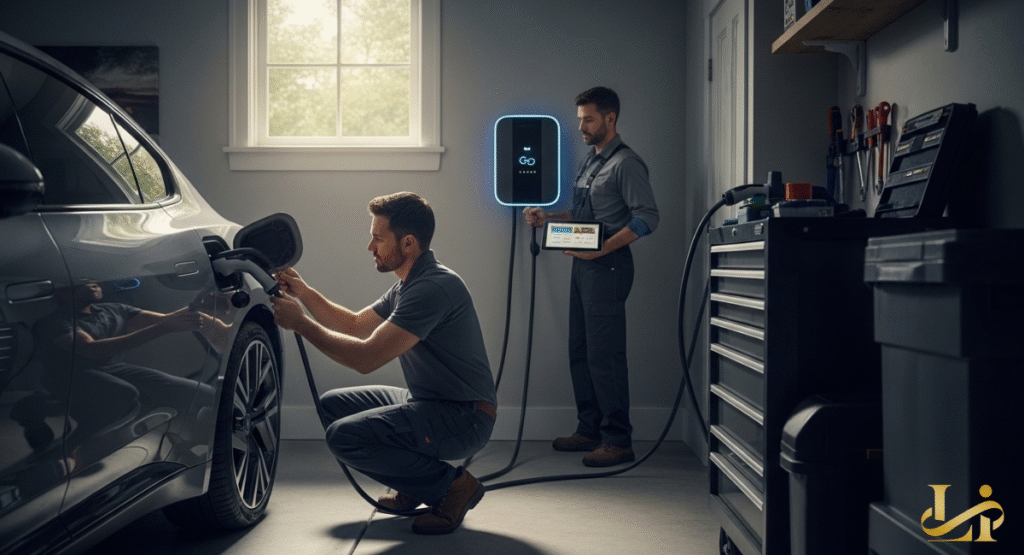
For many homeowners, installing an EV charger no longer feels overwhelming. Turnkey installation programs now guide drivers through the process step by step.
Most households choose between installing a 240-volt outlet for flexibility or opting for a hardwired charger for consistent power delivery.
Battery electric vehicles (BEVs) and plug-in hybrid electric vehicles (PHEVs) typically include dual-voltage charging units that support both Level 1 and Level 2 charging.
Many Toyota models, for instance, use a 7.7 kW onboard charger that pairs efficiently with Level 2 systems delivering up to 50 amps at 240 volts.
Financial incentives also play a major role. Under the Inflation Reduction Act, homeowners may qualify for a federal tax credit covering up to 30 percent of installation costs.
In many states, additional rebates further reduce expenses. Utility companies often provide time-of-use pricing, allowing drivers to charge overnight at lower rates. These cost-saving measures make EV Charging more financially appealing for new buyers.
| Charging Option | Power Output | Best For |
|---|---|---|
| Level 1 Charging | 120V | Light or occasional driving |
| Level 2 AC Charging | Up to 12 kW peak power output | Daily commuting |
| Hardwired Charger | Stable high load | Faster, consistent charging |
Ford Partners With ChargePoint in Europe for Commercial EV Charging
While some automakers focus on residential charging, Ford has strengthened its commercial charging strategy through a partnership with ChargePoint in Europe.
Although the program operates overseas, it offers insights that could influence U.S. fleet strategies.
Fleet operators require reliability and predictable charging schedules. Delivery companies, municipalities, and logistics providers depend on vehicles that can recharge quickly and return to service without delays.
Through managed charging software and depot hardware systems, Ford is working to improve operational efficiency for electric vans and commercial vehicles.
Fleet electrification can help businesses control fuel costs while lowering emissions. If these European programs continue performing well, similar approaches may expand more aggressively in the United States.
Stellantis’ $25.9 Billion EV Write-Down and Legal Scrutiny
Not every automaker’s EV transition has been smooth. Stellantis reported a significant write-down tied to its electric vehicle investments, raising concerns among some investors.
A U.S. law firm began reviewing whether the company had fully disclosed potential risks related to its EV strategy.
The situation highlights how capital-intensive the shift to electric mobility can be. Developing batteries, scaling production, and building charging partnerships require substantial investment.
Profit margins can remain tight during transition periods, especially when market demand fluctuates.
For investors, clarity and long-term planning are critical. Companies that communicate transparently about risks and timelines tend to maintain stronger confidence during industry shifts.
Financial Performance of Major Automakers in the EV Transition
Ford has also faced financial pressures, including recalls affecting millions of vehicles. Software updates and hardware repairs added unexpected costs, demonstrating how complex modern vehicle systems have become.
At the same time, automakers continue investing heavily in battery plants, supply chains, and charging partnerships.
While these investments may reduce short-term profitability, they are designed to strengthen long-term competitiveness and customer retention.
| Automaker | Key Challenge | Strategic Response |
|---|---|---|
| Ford | Recall expenses | Expanded charging partnerships |
| Stellantis | Write-down | Asset restructuring |
| Toyota | Market shift | Residential charging integration |
EV Innovation & Excellence Awards 2025 Highlights
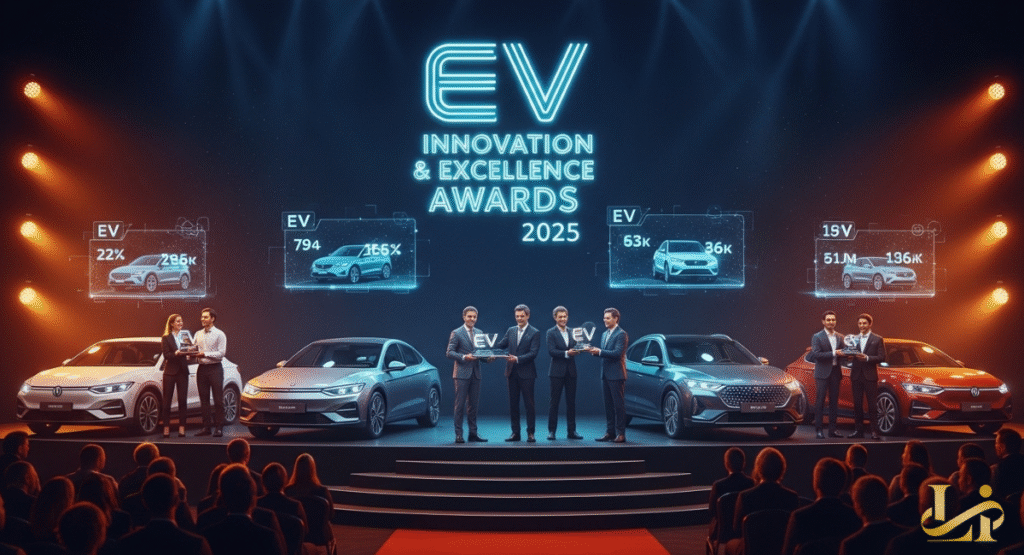
Despite financial and operational challenges, innovation within the EV sector continues. The 2025 EV Innovation Awards recognized improvements in charging technology and battery efficiency.
Modern smart chargers can now adjust charging speed based on grid demand, helping reduce strain during peak hours.
Over-the-air updates allow vehicles and charging systems to improve performance without requiring dealership visits. Charging networks increasingly use predictive analytics to anticipate peak usage and improve station reliability.
For consumers, these developments translate into shorter installation times, better uptime at public chargers, and easier billing experiences.
Recalls, Software Issues, and Their Impact on EV Brands
As vehicles rely more heavily on software systems, even minor programming errors can affect large numbers of cars. Ford’s recall involving millions of vehicles illustrates how quickly issues can escalate in today’s connected automotive environment.
Beyond software, supply chain constraints and component defects can also disrupt production schedules and profitability.
Automakers are investing more in diagnostics, predictive maintenance, and rapid-response systems to address issues early.
Brands that communicate clearly and act quickly often preserve customer trust. Delays or unclear messaging, on the other hand, can damage reputation.
Competitive Landscape: Ford, Toyota, Stellantis, and Nissan
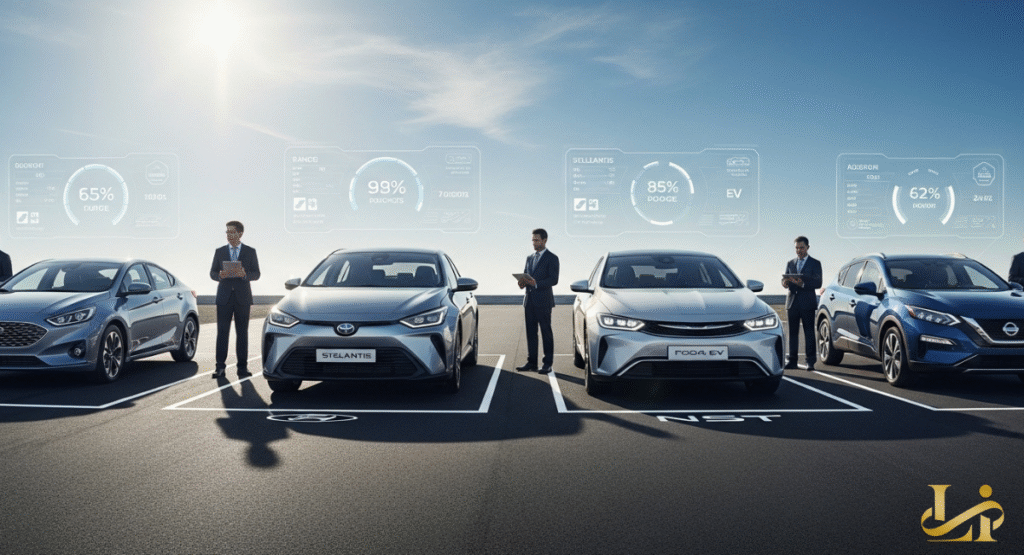
Competition remains intense as automakers compete for EV market share. Toyota, Lexus, Ford, and Nissan continue refining their charging strategies to attract new buyers.
Nissan’s build-to-order approach, for example, aims to reduce excess inventory while offering customization options.
The electrification race in SUVs and trucks has intensified expectations for charging compatibility. Adoption of the NACS charging connector and the SAE J1772 plug helps ensure broader interoperability across networks.
Vehicles equipped with either the NACS connector standard or SAE J1772 charging port must integrate seamlessly with home and public charging stations.
| Connector Type | Compatibility |
|---|---|
| NACS Charging Connector | Newer EV models |
| SAE J1772 Plug | Older EVs and hybrids |
Reliable compatibility reduces uncertainty for buyers and simplifies the transition to electric driving.
The Future of EV Charging Infrastructure in the U.S. and Europe
Public charging networks continue expanding, supported in part by federal funding aimed at installing highway fast chargers.
However, research consistently shows that most EV charging still takes place at home, reinforcing the importance of dependable residential infrastructure.
Fleet electrification is also gaining momentum as cities and corporations invest in depot charging hubs. Utility companies are upgrading grid capacity and promoting smart charging programs to distribute demand during off-peak hours.
With sustained public and private investment, infrastructure growth is expected to continue steadily throughout the decade.
Long-Term Outlook for Global EV Adoption
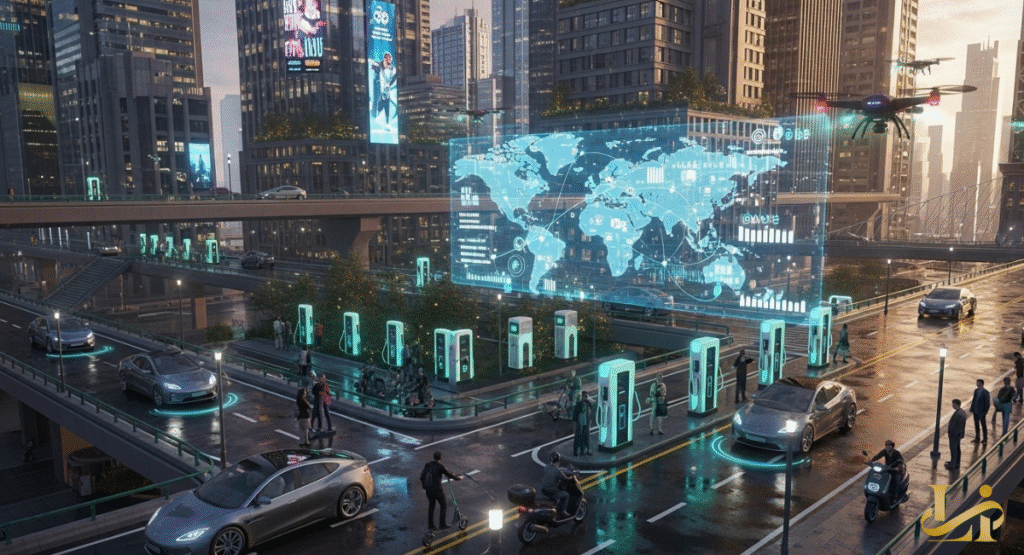
Looking toward 2030, analysts expect continued growth in electric vehicle adoption as battery costs decline and charging access improves.
Advances in onboard charger technology are likely to reduce charging times and increase overall efficiency.
Many homeowners now consider EV charging part of broader home energy planning, especially when integrating solar panels or energy storage systems.
While supply chains and profitability challenges remain, measurable progress continues year after year.
Electric vehicles are no longer a distant concept. They are already part of daily transportation for millions of drivers, and ongoing infrastructure investments suggest that their presence will only expand in the years ahead.
FAQS
How much does an EV cost to charge?
It typically costs between $10 and $20 to fully charge most EVs at home in the U.S., depending on electricity rates and battery size.
What is EV charging?
EV charging is the process of supplying electricity to an electric vehicle’s battery using a residential or public charging station.
How do I pay for EV charging?
Payment methods include mobile apps, credit or debit cards at public stations, or your regular electricity bill when charging at home.
What is the EV charging process?
You connect the charging cable to the vehicle’s charging port, electricity flows into the battery, and charging automatically stops once the battery reaches full capacity.
Is it cheaper to buy an EV than gas car?
Although EVs may cost more upfront, lower fuel and maintenance expenses often make them more affordable to own over time compared to gasoline vehicles.

I write about the world of luxury, from timeless style to premium living, inspiring readers to embrace elegance in everyday life.