The U.S. electric vehicle market is changing fast, and Slate Auto’s $24,950 electric truck highlights a bold vision for affordable mobility in the USA. This concept focuses on building a budget electric pickup truck that fits the everyday needs of real people, rather than just catering to premium buyers.
Slate Auto is entering the space as an affordable EV startup, aiming to fill the growing affordable EV market gap with a practical yet stylish option.
With rising costs showcasing strong consumer price sensitivity, car buyers are demanding true value and reliability. This truck promises a smart balance between price, performance, and simplicity, making it a serious contender in the evolving compact pickup truck segment.
As competition increases, solutions like this highlight a shift toward practical innovation over luxury excess. The focus is now on accessibility and everyday usability. This emerging trend could completely redefine how Americans view electric trucks in the coming years.
A Defining Moment in Electric Mobility: Introducing Slate Auto’s Vision
Slate Auto is intentionally avoiding the traditional EV playbook by focusing strictly on simplicity and aggressive cost control. As an affordable EV startup, the company is trying to solve a real-world problem: many drivers want electric trucks but simply cannot afford them. That massive gap in the market created a strong opportunity.
The company’s vision centers on a small electric pickup truck designed for modern utility. It specifically targets drivers who want everyday practicality without a luxury overload.
This approach directly aligns with the broader EV demand decline seen in recent 2025 trends, where buyers are starting to care far more about baseline value than flashy, expensive features.
This shift highlights a major change in consumer mindsets across the automotive industry. Affordability and functionality are becoming far more important than brand prestige. If Slate Auto executes this strategy effectively, it has the potential to set a brand-new standard for budget-friendly electric vehicles in the U.S.
The $24,950 Electric Truck: Where Accessibility Meets Refined Engineering
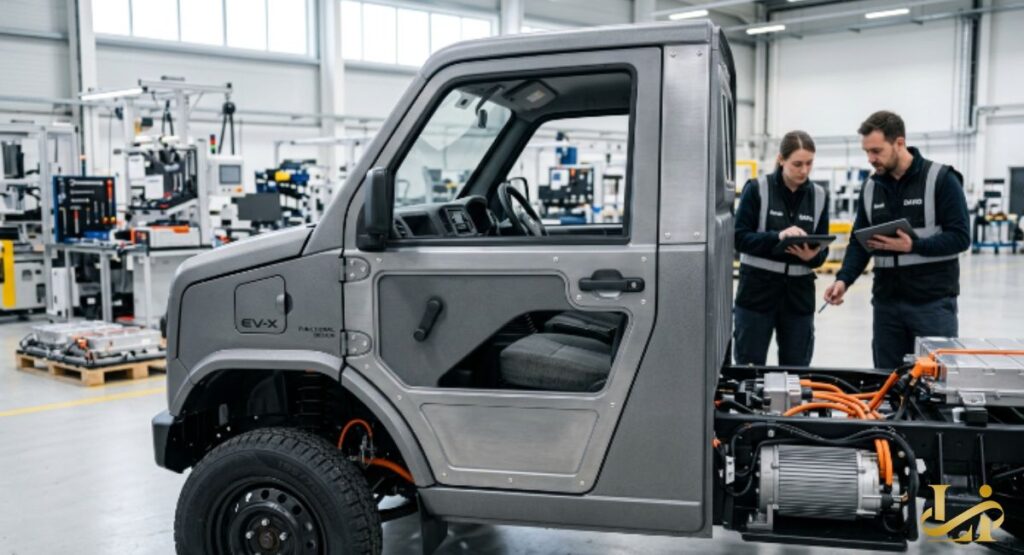
Every component is optimized to hit an ambitious price without cutting capability.
The truck offers highly practical performance, featuring a 205-mile electric range, a rear-wheel-drive EV setup, and an 181-horsepower electric truck power system. While these specs may not sound extreme, they are more than enough for daily driving, fitting perfectly into the entry-level electric pickup category.
This kind of balanced performance is ideal for urban commuters and light-duty users alike. It proves that an electric truck doesn’t need extreme, unnecessary power to be incredibly useful. By focusing on efficiency and everyday usability, Slate Auto strengthens its position in the competitive affordable EV space.
Here is a simple comparison table:
| Feature | Slate Truck | Typical EV Truck |
| Price | $24,950 | $50,000+ |
| Range | 205 miles | 250–400 miles |
| Power | 181 HP | 300+ HP |
This data points to an undeniable reality: buyers are completely open to accepting a cost-vs-performance EV trade-off if the entry price is right.
Backed by Visionaries: The Strategic Power Behind Slate Auto
Strong financial backing gives Slate Auto immediate credibility. Operating as a Bezos-backed startup brings instant trust and mainstream attention, proving that major investors believe in its long-term growth.
The company has already completed multiple EV startup funding rounds, securing solid financial support.
This backing helps the company compete in an incredibly crowded space where many rivals continue to struggle due to high-profile EV startup failures. Slate Auto aims to be different by focusing heavily on lean operations and radical EV manufacturing cost reduction strategies to stay competitive.
This financial foundation allows the company to invest in smart innovation without overspending. It creates vital stability in a market where many startups burn through cash far too quickly. With disciplined execution, Slate Auto can easily turn this backing into a lasting competitive advantage.
Precision Meets Personalization: The Rise of Modular Vehicle Design

Buyers can configure trucks, SUVs, or campers from the same base architecture.
One of the most unique ideas behind the truck is its modular electric vehicle concept. Buyers can easily transform the vehicle into different formats, supporting flexible DIY vehicle customization based on changing daily needs.
The vehicle can even transform into an electric SUV conversion truck by utilizing a modular truck-to-SUV conversion system. This reflects the growing demand for personalization in modern automotive industry trends, where customers want total control over how their vehicle looks and functions.
This built-in flexibility adds massive long-term value for buyers by extending the vehicle’s overall usability. It also reduces the need to purchase multiple vehicles for different purposes. As customization demand grows, this modular approach could easily become a key differentiator in the EV market.
Minimalism Redefined: A Sophisticated Approach to Automotive Simplicity
Slate Auto willingly removes unnecessary features to save buyers money. The truck includes manual crank windows and acts as a streamlined, no-infotainment-system vehicle. Cutting these components dramatically reduces both upfront cost and mechanical complexity, following a strict, simple electric vehicle design philosophy.
The exterior utilizes durable, injection-molded body panels paired with optional vinyl wrap car colors. This approach supports the growing minimalist car design trend. Less complexity inherently means a lower purchase price and much easier repairs down the road.
This design philosophy also improves the long-term ownership experience by lowering routine maintenance costs. It makes the vehicle far more accessible for budget-conscious buyers. In a market filled with over-engineered options, this deliberate simplicity stands out as a practical advantage.
Engineering Profitability: Inside Slate’s Ambitious Financial Strategy

Real-time metrics track efficiency, cost, and projected revenue per vehicle.
Slate Auto focuses heavily on baseline profit margins. The executive plan aims to become a gross-margin-positive EV company early in its lifecycle, targeting positive EV startup cash flow by 2027—an ambitious yet achievable timeline.
The company expects to hit its financial break-even point at 80,000 vehicles annually. Reaching this milestone depends entirely on scalable EV production and highly efficient assembly processes, keeping manufacturing under tight control to protect margins.
This disciplined financial strategy sets it apart from the typical cash-burning startups in the EV space. It shows a clear focus on long-term sustainability, not just rapid growth. If executed properly, this business model could make Slate Auto a rare example of early profitability in the electric vehicle industry.
Navigating Market Realities: EV Challenges in a Competitive Landscape
The broader EV market is facing intense macroeconomic pressure. The end of the EV tax credit in the USA has naturally reduced overall consumer demand, while rising manufacturing costs create new barriers for everyday buyers. This combination has accelerated the consumer price sensitivity trends we see across the car market today.
Major industry players are struggling to adapt as well. Recent reports of Lucid Motors layoffs highlight these widespread industry challenges. Combined with rising EV competition, it creates a tough environment for any new entrant trying to gain a foothold.
This situation makes affordability the single most important factor for success in the current EV space. Companies that can balance cost, quality, and innovation will hold a clear advantage. In this environment, budget-focused models like Slate Auto’s truck are well-positioned to attract a wider audience.
The Competitive Arena: Can Slate Redefine the Affordable EV Segment?

Competition spans startups and legacy automakers fighting for value leadership.
Slate Auto enters a crowded field and will face tough Rivian R2 competition along with other emerging models. However, because most rivals focus almost exclusively on premium pricing, they leave a clear, unaddressed affordable EV market gap.
The company positions itself smartly within the compact pickup truck segment. This specific category is growing incredibly fast because buyers want smaller, more affordable trucks. Slate’s electric truck under $30,000 strategy fits perfectly into this market demand.
This positioning gives Slate Auto a strong opportunity to stand out in a price-sensitive market. As demand shifts toward utility and value, affordable compact trucks may see faster adoption rates. If the company executes well, it could easily capture a loyal customer base looking for budget-friendly electric alternatives.
Winning Over the Skeptics: Is Price Enough to Drive EV Adoption?
Many drivers still prefer traditional gas trucks, and the debate surrounding gasoline vs electric truck adoption continues to rage. Buyers frequently worry about range limitations, public charging access, and long-term reliability—all of which remain valid EV skeptics’ concerns.
However, a drastically lower price point has a funny way of changing consumer behavior. A low-price electric cars strategy in the USA makes transitioning to electric power much more accessible. If Slate delivers genuine value, it can overcome the biggest traditional EV adoption barriers.
Over time, steady improvements in charging infrastructure and battery technology will help ease these common concerns. As more affordable options enter the market, consumer confidence is bound to grow, gradually accelerating the transition away from gas trucks.
Looking Ahead: Production, Expansion, and the Road to Public Markets
Slate Auto plans to scale its operations quickly. Its factory infrastructure targets a strong EV production capacity output in Indiana, which will support growing demand across the US market.
The company is also exploring direct-to-consumer EV sales to bypass traditional dealership costs and protect its margins. If successful, this streamlined model could lead to strong EV startup profitability and pave the way for a future public listing.
Faster scaling will help the company achieve true economies of scale, lowering per-unit costs over time. This will inevitably strengthen its competitive position in the affordable EV space. With efficient distribution and production strategies, Slate Auto could expand rapidly and capture a massive share of the growing market.
Conclusion
Slate Auto is taking a bold step by refusing to chase luxury features. Instead, its focus remains locked on affordability, simplicity, and modular flexibility, making its budget electric pickup truck highly attractive to everyday consumers.
If its real-world execution matches its corporate vision, this $25,000 electric truck could completely reshape the market. It may not be perfect for everyone, but it solves a major problem by finally making affordable electric mobility a reality.
This approach could inspire other automakers to rethink their pricing strategies and product designs. As more companies shift toward simplicity and cost-efficiency, the overall EV market will naturally become more inclusive, driving mass adoption across the country.
FAQS
How much is the Slate truck going to cost?
The Slate electric truck is expected to cost around $24,950, making it one of the cheapest EV trucks in the U.S.
Who is Slate Auto owned by?
Slate Auto is a private company backed by high-profile investors, including Jeff Bezos, and is not publicly traded.
Is Slate Auto legitimate?
Yes, Slate Auto is a legitimate EV startup, but it is still in its early stages and has not yet started mass-producing vehicles.
Will Slate Auto make a car?
Yes, Slate Auto plans to manufacture and sell its own line of electric vehicles, starting first with its compact pickup truck.
Is the $10,000 Toyota truck real?
Yes, but it is not available in the U.S. market. It is currently only sold in limited international markets as a basic, no-frills utility model.

I write about the world of luxury, from timeless style to premium living, inspiring readers to embrace elegance in everyday life.