The challenges surrounding Starbucks AI in 2025 have become one of the most talked-about stories in retail technology. Over the last few years, businesses across multiple industries have invested heavily in artificial intelligence, hoping to improve efficiency, reduce costs, and streamline everyday operations. Starbucks was no exception. The company explored several technology-driven initiatives designed to modernize store management and enhance operational performance.
One of the most ambitious efforts involved inventory tracking systems powered by advanced automation tools. The goal was straightforward: improve inventory accuracy, reduce waste, and help employees spend less time on manual counting. However, the rollout revealed a gap between technological expectations and the realities of running thousands of busy retail locations.
At the same time, store closures and restructuring efforts involving Starbucks kiosks inside Kroger locations attracted attention from analysts and investors. Together, these developments sparked broader discussions about the future of automation, retail efficiency, and the role technology should play in customer-facing businesses.
The story of Starbucks AI is not simply about a technology setback. It is also a lesson in how companies adapt when innovation does not immediately deliver the expected results. As Starbucks continues refining its strategy, industry observers are watching closely to see how the company balances technology, customer experience, and operational stability moving forward.
Starbucks AI Experiment Faces Setback After Inventory and Workflow Issues
The inventory management initiative associated with Starbucks AI was introduced with high expectations. Using smart cameras and automated tracking technology, the system was designed to monitor products such as milk, syrups, cups, and other essential ingredients throughout the day. In theory, this would reduce human error and provide managers with more accurate inventory data.
Initially, the concept appeared promising. Retailers have long struggled with inventory management, and automation seemed like a practical solution. However, once the technology was introduced into real-world store environments, employees began reporting issues that affected daily operations.
Some workers noted that the system occasionally misidentified products or produced inventory counts that did not match actual stock levels. These discrepancies created confusion during busy shifts, forcing employees to spend additional time verifying information manually. Instead of reducing workload, the technology sometimes added extra steps to routine tasks.
The challenges highlighted a common problem faced by many organizations implementing artificial intelligence solutions. Controlled testing environments often differ significantly from real stores where products move constantly, employees work at varying speeds, and customer demand can change without warning.
For Starbucks, the experience demonstrated that deploying advanced technology at scale is far more complicated than developing the technology itself. While the initiative showed potential, it also revealed how difficult it can be to create systems that perform consistently across thousands of unique locations.
The experience surrounding Starbucks AI serves as a reminder that even sophisticated technology requires ongoing adjustments and real-world testing before it can deliver reliable results at scale.
Why Starbucks Quietly Retired Its AI Agent After Early Deployment
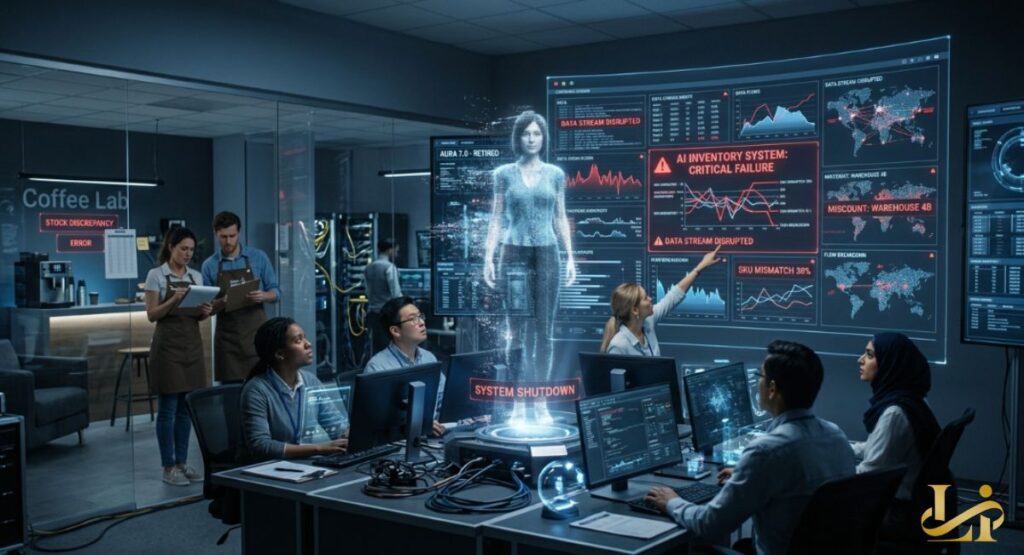
Data stream errors and warehouse miscounts lead to a full system shutdown.
As concerns about accuracy continued to emerge, Starbucks eventually moved away from some of its early automated inventory initiatives. Reports suggested that employees frequently needed to review and correct information generated by the system, reducing the efficiency gains the technology was expected to provide.
For frontline workers, one of the biggest frustrations was the amount of manual intervention required. A tool intended to simplify operations instead became something that often needed supervision. In fast-paced retail environments where every minute matters, this created additional pressure for store teams.
The difficulties encountered by Starbucks AI reflect a broader challenge facing businesses that adopt automation too quickly. Technology may perform well in controlled scenarios, but retail stores present unique obstacles. Inventory changes rapidly, products are moved throughout the day, and customer traffic patterns vary significantly from location to location.
Industry experts frequently point out that successful automation depends not only on technical capability but also on adaptability. Systems must respond to changing conditions without requiring constant human correction. When that balance is not achieved, the promised benefits become harder to realize.
The early deployment experience also raised important questions about the future of AI-driven inventory management. Can automation truly replace traditional inventory checks? Or is a hybrid approach that combines technology with human oversight more realistic?
For many observers, the lessons learned from Starbucks AI suggest that the future lies somewhere in the middle. Rather than replacing human decision-making entirely, technology may work best when it supports employees and helps them perform tasks more efficiently.
Although the initiative encountered setbacks, it provided valuable insights that could influence future retail technology projects both inside and outside Starbucks.
Brian Niccol’s “Back to Starbucks” Strategy and Company Reset Plan
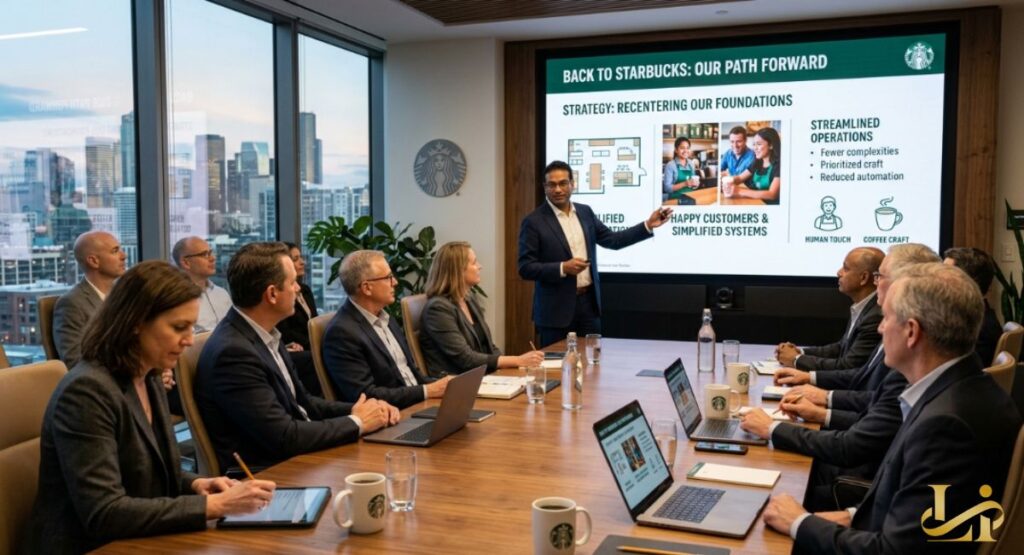
The new strategy prioritizes simplified systems and customer experience over tech.
As the company reassessed its priorities, leadership introduced what became known as the “Back to Starbucks” strategy. The initiative focused on returning attention to the core elements that helped build the brand’s reputation: customer service, store experience, product quality, and operational consistency.
Rather than emphasizing technology as the primary solution to every challenge, the strategy promoted a more balanced approach. Artificial intelligence and automation would still have a role, but they would be used selectively and strategically rather than serving as the centerpiece of operational decision-making.
This shift came at a time when many companies were reevaluating how they implemented emerging technologies. The experience with Starbucks AI reinforced the idea that innovation should enhance business operations rather than complicate them.
Under the revised strategy, Starbucks began placing greater emphasis on staffing levels, store layouts, service speed, and employee support. Leadership recognized that customer satisfaction depends on more than technology. Human interaction, efficient workflows, and a welcoming environment remain critical factors in the retail experience.
The company also appeared to adopt a more practical perspective on automation. Instead of pursuing technology for its own sake, decision-makers focused on identifying areas where digital tools could provide measurable value without disrupting daily operations.
The evolution of Starbucks AI reflects this broader strategic shift. Rather than abandoning innovation, Starbucks seems to be refining how technology is integrated into its business model.
Many analysts view this approach as a realistic response to the challenges of modern retail. While artificial intelligence can offer significant advantages, successful implementation often requires patience, testing, and a clear understanding of operational realities.
By returning attention to its core strengths while continuing to explore targeted technology solutions, Starbucks aims to create a more sustainable path forward.
Retail Automation Challenges: Why AI Is Not Always a Smooth Upgrade
The difficulties experienced by Starbucks are not unique. Across the retail industry, organizations have discovered that automation projects often encounter unexpected obstacles during implementation. What works in a demonstration or pilot program does not always translate seamlessly into everyday operations.
One reason is the complexity of retail environments. Stores are constantly changing. Inventory levels fluctuate, customer behavior varies, and employees adapt workflows to meet shifting demands. These factors create conditions that can be difficult for automated systems to interpret accurately.
The story of Starbucks AI illustrates this challenge clearly. While the technology was designed to improve efficiency, the unpredictable nature of store operations exposed limitations that may not have been obvious during development.
Retail experts frequently emphasize the importance of flexibility when designing AI systems. Instead of aiming for perfect automation, businesses often achieve better results by creating tools that can work alongside employees and adapt to changing circumstances.
Another important lesson involves scalability. A solution that performs well in a handful of locations may face entirely different challenges when deployed across hundreds or thousands of stores. Differences in store size, staffing, inventory organization, and customer traffic can significantly impact performance.
The experience with Starbucks AI highlights why many retailers are moving toward hybrid models that combine technological support with human oversight. This approach allows businesses to benefit from automation while maintaining the adaptability and judgment that employees provide.
As the retail sector continues experimenting with new technologies, companies are likely to place greater emphasis on practical implementation rather than ambitious promises. The goal is no longer simply to automate processes but to improve them in ways that deliver measurable value for both employees and customers.
Starbucks and the Future of AI in Retail Operations
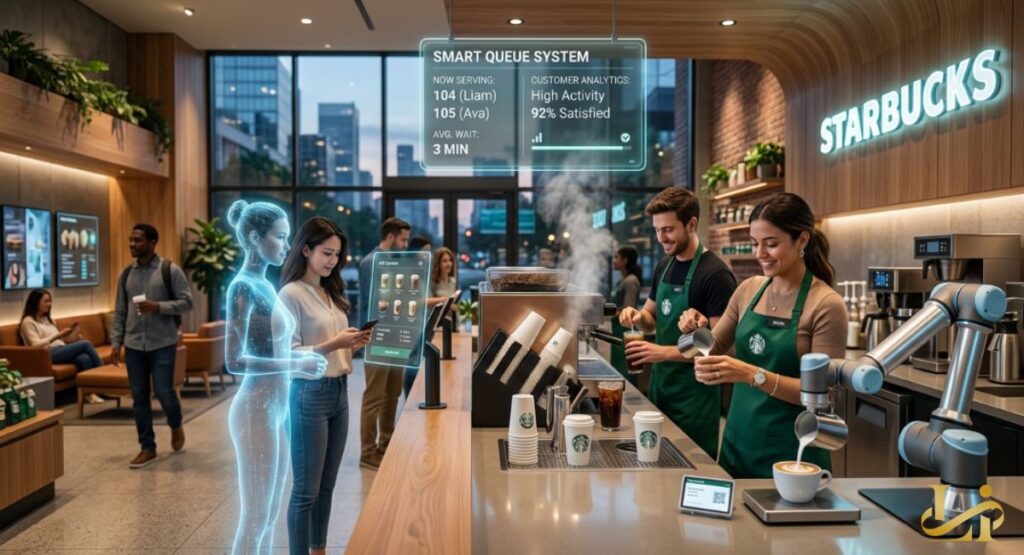
Technology aims to streamline operations while preserving the coffeehouse experience.
Despite the challenges encountered during earlier technology rollouts, Starbucks has not turned away from innovation. Instead, the company appears to be taking a more measured and strategic approach to how it uses artificial intelligence across its operations. The experience with Starbucks AI demonstrated that successful implementation requires more than advanced technology—it also requires systems that fit naturally into daily workflows.
Today, Starbucks continues exploring tools that can help improve efficiency, reduce wait times, and support employees in delivering better customer service. Rather than attempting to automate every process, the company is focusing on technologies that complement human decision-making.
Many retail analysts believe the future of Starbucks AI will center on hybrid systems. These solutions combine machine-driven insights with employee expertise, allowing staff members to make informed decisions while still maintaining control over critical operational tasks.
This balanced approach offers several advantages. It can help reduce errors, improve consistency, and create a smoother customer experience without introducing unnecessary complexity into store operations. By learning from previous setbacks, Starbucks has an opportunity to build systems that are both practical and scalable.
The evolution of Starbucks AI may ultimately serve as a valuable case study for other retailers seeking to integrate emerging technologies into customer-focused environments.
Starbucks to Include AI Usage in Tech Workers’ Bonus Structure
Another notable development involves the growing emphasis on accountability for technology investments. As businesses continue allocating significant resources toward artificial intelligence initiatives, executives increasingly want measurable results from those investments.
Reports suggest that Starbucks has explored ways to connect technology performance with employee evaluation metrics. The goal is not simply to encourage more technology adoption but to ensure that new tools contribute meaningfully to business objectives.
For technology teams, this creates additional responsibility. Success is no longer measured solely by whether a system launches successfully. Instead, performance may also be evaluated based on operational improvements, efficiency gains, and user satisfaction.
The discussion surrounding Starbucks AI reflects a broader trend across corporate America. Companies are becoming more selective about how they invest in emerging technologies and are demanding clearer evidence of return on investment.
Supporters of this approach argue that tying technology initiatives to measurable outcomes can encourage better planning and more thoughtful implementation. Rather than pursuing innovation for publicity or trend-following purposes, organizations are focusing on practical applications that solve real operational challenges.
As Starbucks AI continues evolving, accountability and measurable business value are likely to remain central themes in the company’s technology strategy.
Kroger Shuts Down Starbucks Kiosks in Central Ohio Stores
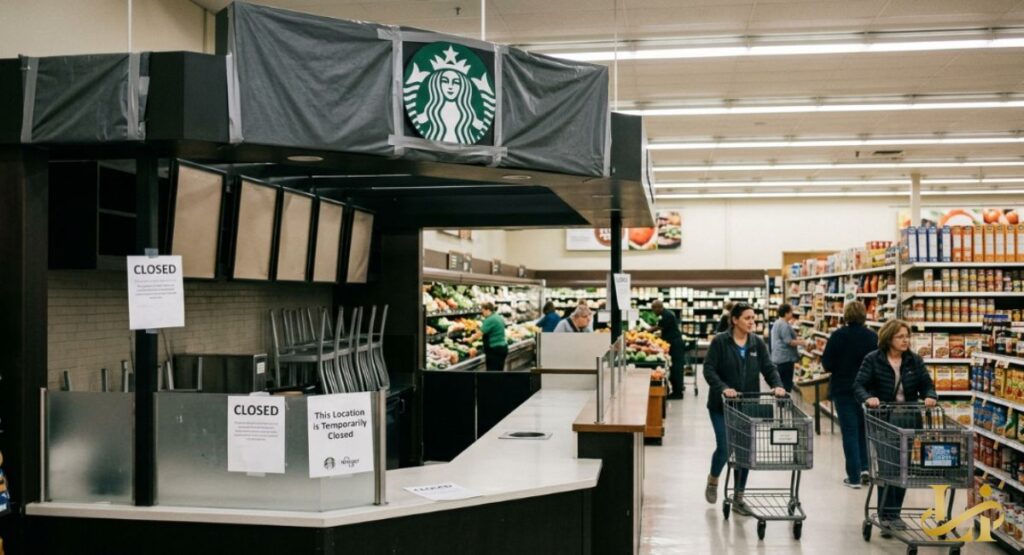
The closures reflect broader changes in partnership and store footprint strategy.
While discussions about artificial intelligence captured significant attention, Starbucks also faced questions related to store partnerships and retail restructuring. Several Starbucks kiosks operating within Kroger stores in Central Ohio were closed as part of broader operational changes.
These closures were not necessarily connected to technology initiatives, but they contributed to wider conversations about efficiency, profitability, and long-term growth strategies. Retail companies regularly evaluate store performance and partnership arrangements to ensure resources are being allocated effectively.
In many cases, underperforming locations are reassessed when companies seek to strengthen their overall business position. Market conditions, customer demand, foot traffic, and operating costs all play a role in these decisions.
For Starbucks and Kroger, the restructuring effort highlighted the importance of focusing on locations that align with long-term strategic goals. Rather than maintaining every existing partnership, companies increasingly prioritize performance and sustainability.
The attention surrounding Starbucks AI may have dominated headlines, but the kiosk closures demonstrated that operational decisions across the retail landscape are influenced by a wide range of factors beyond technology alone.
What Starbucks Closures in Kroger Stores Reveal About Retail Strategy
The recent kiosk closures provide insight into how major retailers are adapting to changing economic conditions and consumer behavior. Growth is no longer measured simply by the number of locations a company operates. Instead, profitability, efficiency, and customer demand are becoming increasingly important metrics.
This shift reflects a broader transformation occurring throughout the retail industry. Businesses are focusing more heavily on data-driven decision-making and carefully evaluating where investments generate the strongest returns.
The lessons associated with Starbucks AI mirror this mindset. Whether discussing technology initiatives or physical store locations, the underlying objective remains the same: improve performance while minimizing unnecessary costs and operational complexity.
Retail analysts often describe this as a move from expansion-focused thinking toward optimization-focused thinking. Rather than pursuing growth at all costs, organizations are concentrating on strengthening existing operations and maximizing value from current assets.
The Starbucks and Kroger partnership adjustments illustrate how companies are becoming more strategic about resource allocation. Similar decisions are likely to continue as businesses navigate an increasingly competitive marketplace.
Retail Industry Takeaways From Starbucks AI and Expansion Challenges
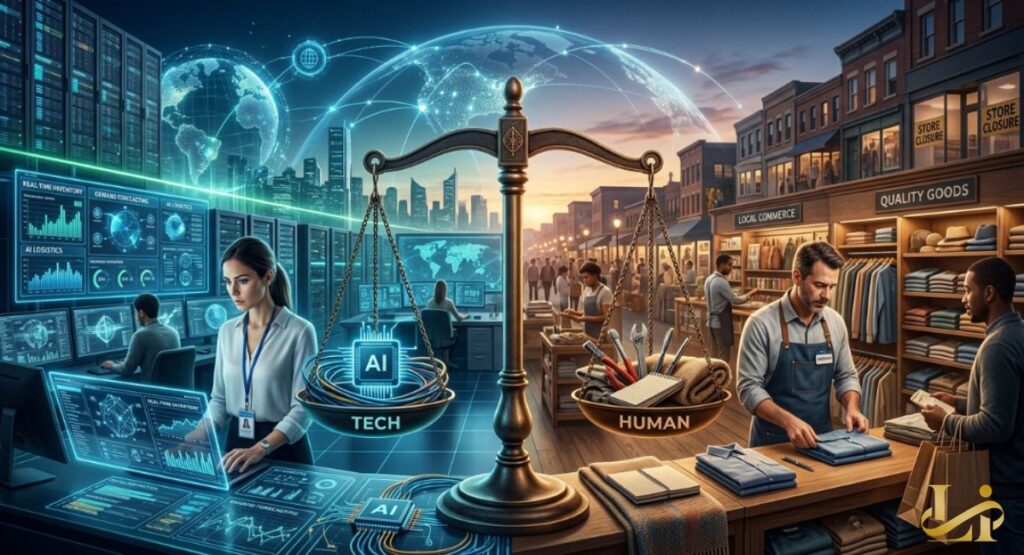
Brands face key takeaways on balancing expansion with authentic customer connection.
The experiences of Starbucks offer several important lessons for retailers exploring automation and artificial intelligence. Perhaps the most significant lesson is that technology alone cannot solve every operational challenge.
The story of Starbucks AI demonstrates that successful innovation requires careful planning, extensive testing, and a clear understanding of how technology will function in real-world environments. Even well-designed systems can struggle when exposed to the complexity of everyday retail operations.
Another key takeaway is the importance of employee involvement. Workers who interact with technology daily often provide valuable feedback that can help identify issues and improve system performance. Ignoring frontline perspectives can increase the risk of implementation challenges.
The evolution of Starbucks AI also highlights the value of flexibility. Retail environments are dynamic, and technology solutions must be capable of adapting to changing conditions. Systems that are too rigid may struggle to deliver consistent results over time.
Finally, the company’s experience reinforces the importance of balancing innovation with practicality. While artificial intelligence offers exciting possibilities, businesses must ensure that new tools genuinely enhance operations rather than creating additional obstacles.
For retailers across the industry, the lessons from Starbucks AI provide a useful reminder that sustainable innovation often happens gradually rather than through dramatic transformation.
Conclusion
The challenges surrounding Starbucks AI, store closures, and automation initiatives in 2025 reveal both the opportunities and risks associated with modern retail innovation. While artificial intelligence continues to offer significant potential, the company’s experience demonstrates that successful implementation requires patience, adaptability, and ongoing refinement.
Throughout the year, Starbucks encountered obstacles that highlighted the gap between technological ambition and operational reality. Inventory tracking issues, workflow disruptions, and restructuring efforts all contributed to a broader reassessment of strategy.
At the same time, the evolution of Starbucks AI shows that setbacks do not necessarily signal failure. Instead, they often provide valuable lessons that help organizations build stronger and more effective systems in the future.
Moving forward, Starbucks appears committed to a balanced approach that combines technology with human expertise. By focusing on practical applications and measurable outcomes, the company can continue pursuing innovation while maintaining the customer experience that has defined its brand for decades.
Ultimately, the journey of Starbucks AI may prove to be less about automation itself and more about discovering how technology can best support people, improve operations, and create lasting value in an increasingly competitive retail environment.
FAQs
What is Starbucks known for?
Starbucks is best known for its premium coffee beverages, espresso-based drinks, and welcoming café atmosphere. The company has built a global reputation for offering consistent quality, innovative seasonal products, and a customer-focused experience.
Why did Starbucks face AI-related challenges in 2025?
Several technology initiatives encountered difficulties adapting to real-world retail environments. Inventory tracking inaccuracies, workflow disruptions, and scalability concerns highlighted some of the challenges associated with implementing advanced automation systems across large store networks.
Is Starbucks still using artificial intelligence?
Yes. Although some early initiatives faced setbacks, Starbucks continues exploring technology solutions that support employees, improve efficiency, and enhance customer service through a more balanced and practical approach.
Why were some Starbucks kiosks in Kroger stores closed?
The closures were part of broader restructuring efforts aimed at improving operational performance and focusing on locations that align with long-term business objectives.
5. What can retailers learn from Starbucks’ experience?
Retailers can learn the importance of testing technology thoroughly, involving employees in implementation decisions, and ensuring that innovation supports business operations rather than complicating them.
Will artificial intelligence remain important in retail?
Yes. Artificial intelligence is expected to play an increasingly important role in retail, but many companies are likely to adopt hybrid models that combine technology with human expertise to achieve the best results.

I write about the world of luxury, from timeless style to premium living, inspiring readers to embrace elegance in everyday life.