The Tesla virtual queue supercharger system is changing how electric vehicle drivers approach charging across the United States. Instead of forming unclear or frustrating physical lines at busy stations, drivers can now rely on a more organized digital process built directly into the Tesla app.
This shift brings a calmer, more predictable experience to something that used to be stressful.
As electric vehicle adoption continues to rise, congestion at charging stations has become a growing issue, especially during peak travel hours. The Tesla virtual queue supercharger system addresses this challenge by introducing structure and fairness into the process.
It’s a practical step forward in making EV charging more efficient and user-friendly.
What Is Tesla’s Virtual Supercharger Queue System?
At its core, the Tesla virtual queue supercharger system is a digital waiting line integrated into both the Tesla mobile app and the vehicle’s infotainment system. Instead of physically waiting near a charger, drivers are placed in a virtual line that keeps everything organized.
When a driver arrives at a busy station, the Tesla virtual queue supercharger system detects congestion and offers the option to join a queue. Once inside, drivers receive a position and estimated wait time.
This removes the guesswork and eliminates the need for informal or unclear line management.
One of the most helpful aspects of the Tesla virtual queue supercharger system is transparency. Drivers can easily see their place in line, how quickly it’s moving, and when a charger will become available.
This clarity makes the entire experience feel more reliable and less stressful.
Why Tesla Introduced Virtual Queues for Superchargers?
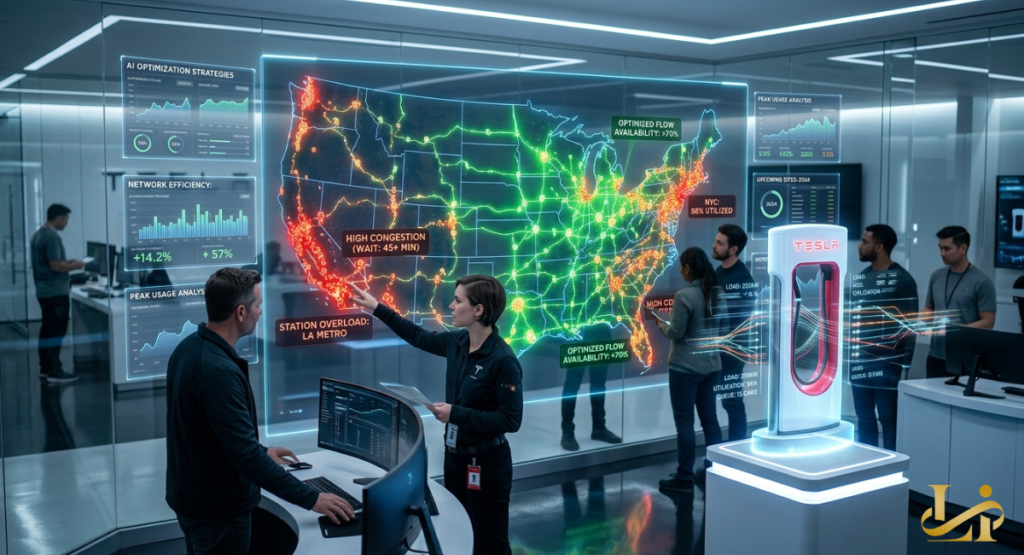
Tesla is tackling congestion with network-wide intelligence.
Tesla introduced the Tesla virtual queue supercharger system in response to increasing pressure on its charging network. As more drivers switch to electric vehicles, demand for charging stations has grown significantly.
In the past, drivers often had to rely on informal systems to determine who was next. This sometimes led to confusion, frustration, or even disagreements.
The Tesla virtual queue supercharger system was designed to remove these issues by creating a fair and automated process.
Another factor is Tesla opening parts of its network to non-Tesla vehicles. With more cars using the same infrastructure, managing access becomes more complex.
The Tesla virtual queue supercharger system helps ensure that everything runs smoothly, even as demand continues to grow.
How the Virtual Queue Works in the Tesla App
The Tesla virtual queue supercharger system is designed to be simple and intuitive. When you arrive at a station, the app automatically checks how busy it is.
If a queue is active, you’ll receive a notification inviting you to join.
After joining, the Tesla virtual queue supercharger system assigns your position and provides an estimated wait time. As other drivers finish charging, your position updates in real time.
This keeps you informed without needing to physically monitor the situation.
Here’s how the process typically works:
Step | Action
1 | Arrive at Supercharger location
2 | App detects congestion
3 | Join the waitlist
4 | Receive queue position and estimated wait
5 | Get notified when it’s your turn
This straightforward approach makes the Tesla virtual queue supercharger system easy to use, even for first-time users.
Tesla App Update: Features and Early Rollout Details
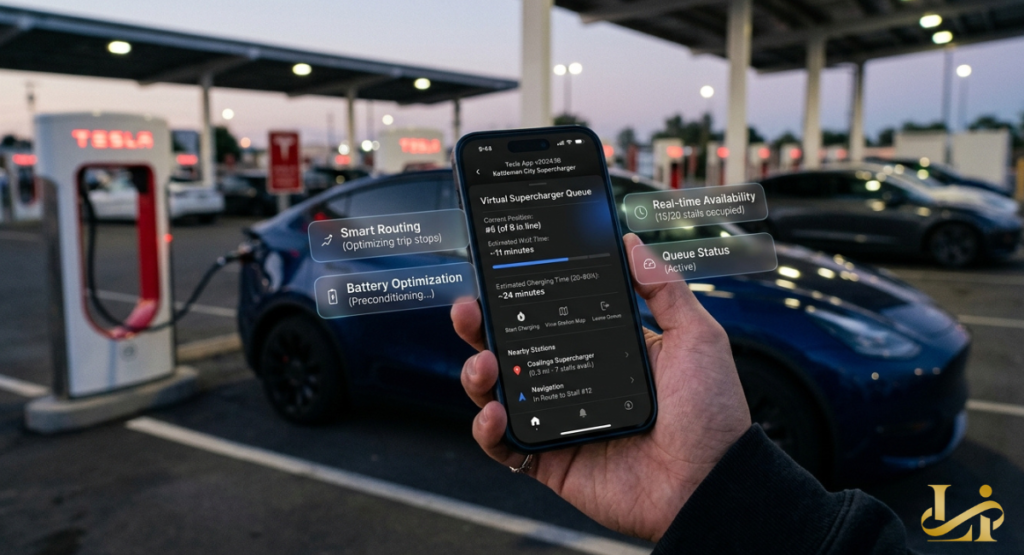
Tesla’s new app update puts you in line before you arrive.
The latest updates supporting the Tesla virtual queue supercharger system include improved location tracking and faster notifications. These features ensure that drivers receive accurate, real-time updates about their charging status.
Tesla has started rolling out the Tesla virtual queue supercharger system in high-traffic areas first, such as major highways and busy urban regions.
These locations tend to experience the most congestion, making them ideal for early implementation.
As the system expands, Tesla continues refining the Tesla virtual queue supercharger system based on user feedback. Improvements in notification timing, queue accuracy, and navigation integration are already making a noticeable difference.
Real Driver Experiences: From Line Cutting to Digital Order
Before the Tesla virtual queue supercharger system, charging at busy stations could feel unpredictable. Some drivers waited longer than expected, while others experienced confusion about who was next.
Now, the Tesla virtual queue supercharger system brings a sense of order to the process. Drivers no longer need to watch for openings or negotiate with others.
Instead, everything is handled automatically and fairly.
Many users have shared that the Tesla virtual queue supercharger system makes charging feel less stressful and more structured.
While occasional issues still happen, the overall experience is much smoother than before.
Will Virtual Queues Eliminate Supercharger Fights Completely?
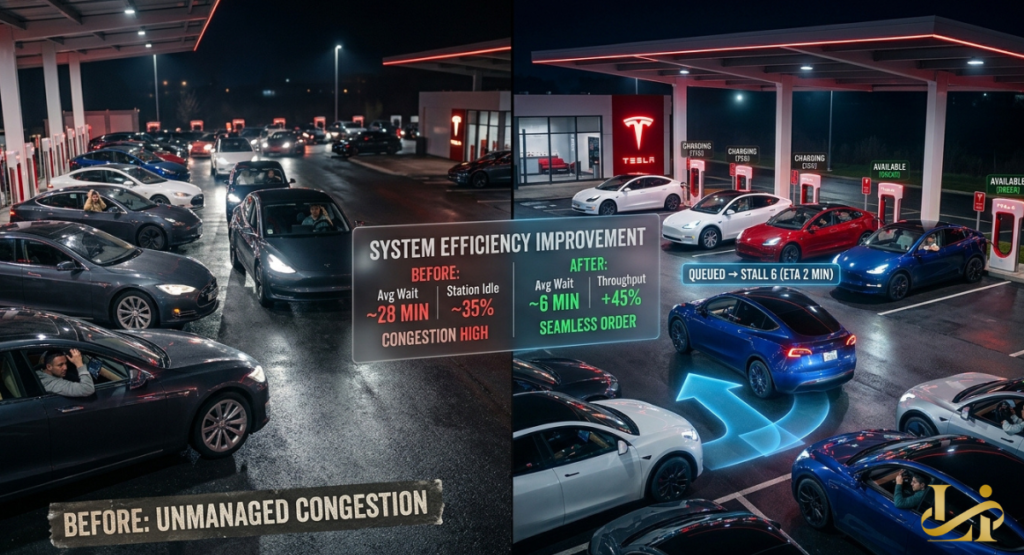
See how digital line management cuts wait times and driver stress.
The Tesla virtual queue supercharger system significantly reduces the chances of conflict, but it doesn’t completely eliminate them.
Human behavior still plays a role, especially during high-demand situations.
That said, the Tesla virtual queue supercharger system removes most of the common causes of frustration, such as unclear lines or perceived unfairness.
With clear rules and real-time updates, drivers are less likely to feel the need to compete for chargers.
Ultimately, the Tesla virtual queue supercharger system works best when drivers follow the system as intended.
When they do, the process is smooth and efficient.
Thanksgiving and Peak Travel: Why Timing Matters
During holidays like Thanksgiving, charging demand spikes dramatically. This is where the Tesla virtual queue supercharger system becomes especially valuable.
Instead of chaotic scenes at busy stations, the Tesla virtual queue supercharger system keeps everything organized.
Drivers can wait comfortably without crowding around chargers, which improves both safety and convenience.
Tesla specifically designed the Tesla virtual queue supercharger system to handle these high-pressure periods, ensuring that even peak travel times remain manageable.
Analysis: Rising EV Adoption and Increasing Charging Demand
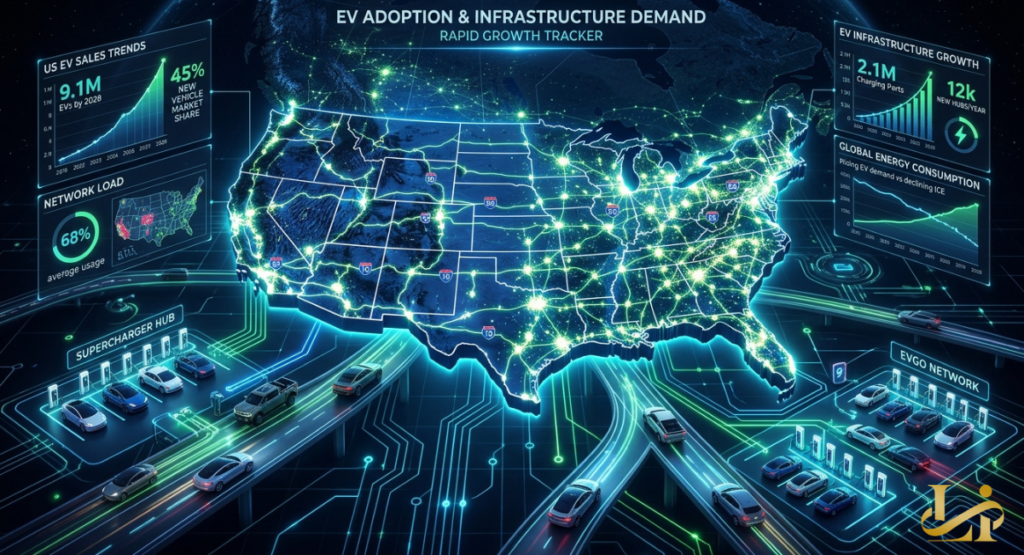
Infrastructure has to scale smarter, not just bigger.
Electric vehicle adoption in the U.S. is growing rapidly, and with it comes increased demand for charging infrastructure.
The Tesla virtual queue supercharger system plays an important role in managing this demand effectively.
By organizing access and reducing inefficiencies, the Tesla virtual queue supercharger system helps balance supply and usage.
It also prepares the network for future growth as more drivers transition to EVs.
As Tesla continues expanding its network, the Tesla virtual queue supercharger system will likely become a key part of its long-term strategy.
Potential Benefits and Limitations of the Virtual Queue System
The Tesla virtual queue supercharger system offers several clear benefits. It improves fairness, reduces confusion, and makes the charging experience more predictable.
However, like any system, it has limitations.
The Tesla virtual queue supercharger system depends on app reliability and user cooperation.
If either of these fails, the experience can still be affected.
Benefits | Limitations
Fair and organized queue | Requires app functionality
Less congestion | Depends on user compliance
Better time estimates | Limited enforcement
Improved experience | Not available everywhere yet
Even with these challenges, the Tesla virtual queue supercharger system represents a meaningful improvement.
What This Means for the Future of Tesla’s Charging Network
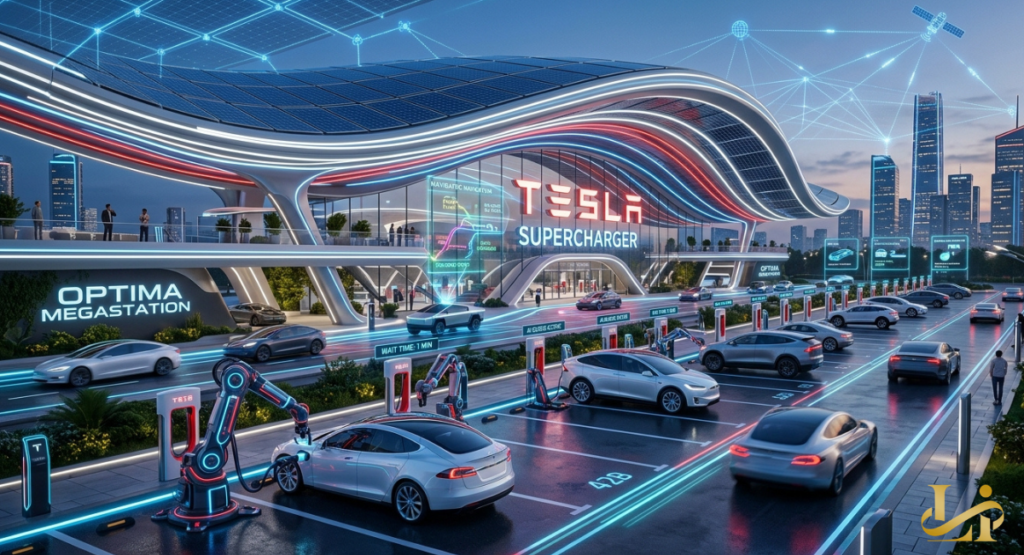
AI, robotics, and solar merge for zero-wait Supercharging.
The Tesla virtual queue supercharger system points toward a future where charging is managed more intelligently.
As technology evolves, we may see features like reservation systems or predictive scheduling.
For now, the Tesla virtual queue supercharger system already shows how software can solve real-world infrastructure problems.
It brings order to a process that once felt uncertain and inconsistent.
Looking ahead, the Tesla virtual queue supercharger system could become a standard feature across the EV industry, setting expectations for how charging networks should operate.
FAQs
What is the Tesla virtual queue supercharger system?
It’s a digital system that organizes drivers into a virtual line at busy charging stations, removing the need for physical queues.
How does it work?
The app detects congestion, assigns a queue position, and notifies you when it’s your turn to charge.
Why was it introduced?
To reduce congestion, improve fairness, and prevent conflicts at busy Superchargers.
Can non-Tesla vehicles use it?
Access depends on Tesla’s network policies, and availability may vary.
Does it completely stop conflicts?
It reduces them significantly, but user behavior still plays a role.

I write about the world of luxury, from timeless style to premium living, inspiring readers to embrace elegance in everyday life.