The Toyota Supra has long held a special place in the hearts of driving enthusiasts. More than just a sports coupe, it represents decades of performance heritage shaped by innovation and driver-focused engineering. From its earliest form to today’s refined fifth-generation model, the Supra has consistently delivered a rear-wheel-drive experience built around balance, control, and straight-line speed.
The latest version combines sharp handling with bold styling and a powerful turbocharged engine that keeps it competitive in today’s performance market. For some drivers, the appeal lies in its 1990s tuner legacy. For others, the modern Supra stands out as a sophisticated sports car designed for everyday roads and weekend track sessions alike.
Toyota Supra Overview and Legacy
The story of the Supra began in 1978 as a more performance-focused variant of the Celica. It didn’t take long for the model to develop its own identity. With a smooth straight-six engine and rear-wheel-drive layout, the Toyota Supra evolved into a true performance flagship for Toyota.
By the 1990s, the fourth-generation model transformed the brand’s image in the United States. Its turbocharged inline-six engine proved capable of handling serious power upgrades, earning respect from tuners and racers alike. That durability helped the Supra gain legendary status, and today well-kept examples remain highly desirable among collectors.
Supra Generations Explained (1978–Present)

Every generation of the Toyota Supra reflects the era in which it was built. The early A40 and A60 models emphasized comfort and smooth highway cruising. The A70 introduced turbocharging and sharper handling characteristics, signaling a shift toward more serious performance.
Then came the iconic A80 generation, widely regarded as the high point in the Supra lineage. Its robust inline-six engine and balanced chassis defined 1990s tuner culture in America. After a long production pause, the Supra returned in 2019 with a completely modern platform developed alongside BMW. While some enthusiasts questioned the partnership, many drivers appreciated the improved rigidity, updated technology, and refined performance it brought to the Toyota Supra name.
2026 Toyota GR Supra Overview
The 2026 Supra continues refining the formula. Toyota has fine-tuned suspension settings and enhanced steering response to create a more connected driving feel. The updates are subtle but meaningful, giving the car a composed personality without losing its playful edge.
In today’s sports car market, the Toyota Supra competes with established performance coupes known for precision and power. Yet it maintains its own identity by blending Japanese design philosophy with European engineering influence. The result is a sports coupe that feels modern, confident, and purpose-built.
2026 Toyota GR Supra Engine, Transmission & 0–60 Performance
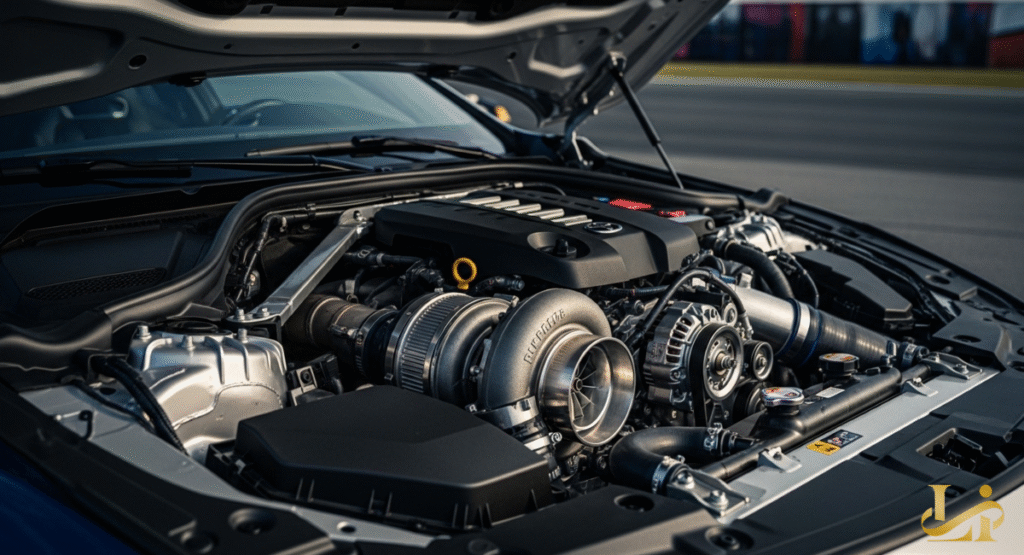
Under the hood, buyers can choose between a turbocharged four-cylinder engine or the more powerful 3.0-liter inline-six. The six-cylinder version of the Supra produces 382 horsepower and delivers strong mid-range torque. Acceleration feels immediate, and the car remains stable even when pushed hard.
Toyota estimates a 0–60 time of 3.8 seconds for the six-cylinder model, a figure that aligns closely with independent testing. Drivers can select either a responsive eight-speed automatic transmission or a six-speed manual gearbox. The availability of a manual has been particularly welcomed by enthusiasts who want a more hands-on connection with the Toyota Supra.
Equipped with a limited-slip differential and performance tires, the car grips confidently through corners. Switching into Sport mode tightens the suspension and sharpens throttle response, making the Toyota Supra feel even more focused.
| Engine Option | Horsepower | 0–60 Time | Transmission |
|---|---|---|---|
| 2.0L Turbo | 255 hp | ~5.0 sec | 8-speed auto |
| 3.0L Turbo | 382 hp | 3.8 sec | Manual or 8-speed auto |
Toyota Supra Pricing, Trims & Buying Guide
The 2026 Supra is expected to start in the mid-$40,000 range in the United States, with higher trims approaching $60,000. Compared to similarly powered European rivals, it offers competitive pricing for the performance it delivers.
Buyers who prioritize driving engagement often gravitate toward the manual trim. Those seeking convenience may prefer the automatic for daily commuting. When considering options and dealer markups, the final price of a Toyota Supra can rise quickly, so shopping carefully is essential.
For drivers comparing alternatives, the Toyota Supra strikes a strong balance between cost and capability, especially for those who value rear-wheel-drive dynamics.
Interior, Comfort & Technology Features
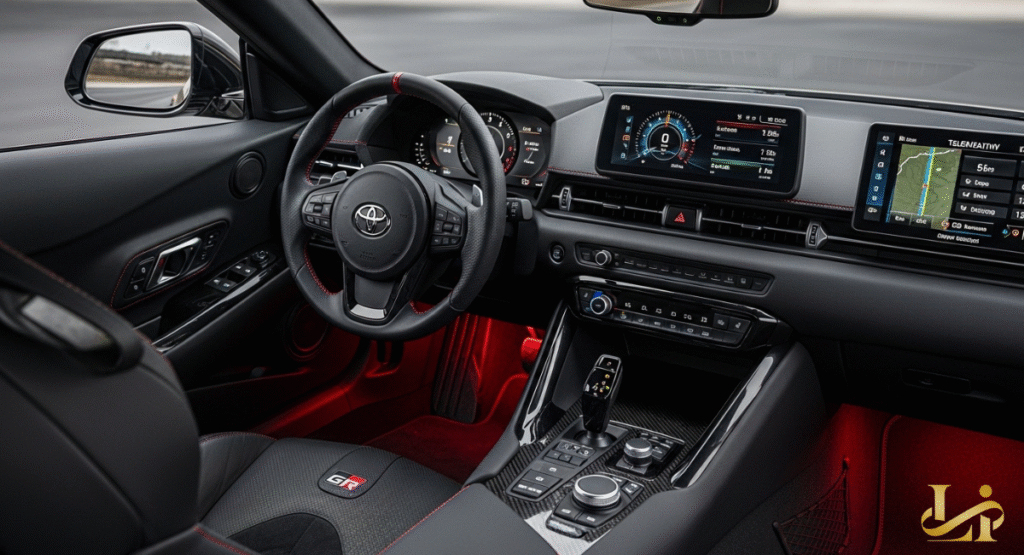
Inside, the Toyota Supra offers a cockpit designed around the driver. The layout is clean and functional, with supportive seats that hold you firmly during spirited driving. While some components share similarities with BMW interiors, everything feels solid and well assembled.
The infotainment system is intuitive and integrates smoothly with Apple CarPlay. Digital displays provide clear performance data without overwhelming the driver. Although cargo space is limited, the hatchback design makes the Toyota Supra more practical than many expect.
For a performance-focused coupe, comfort levels are respectable. Road noise is controlled, and the cabin feels refined enough for longer drives.
Safety, Reliability & Warranty Coverage
Toyota’s reputation for reliability adds confidence for potential owners. Standard safety features include adaptive cruise control, lane departure warning, and automatic emergency braking. These systems help the Toyota Supra remain practical for everyday use.
Warranty coverage is consistent with other Toyota vehicles, offering limited and powertrain protection for several years. Despite its shared engineering roots, the Toyota Supra benefits from Toyota’s quality standards and long-term durability expectations.
Toyota Supra Motorsport, Awards & Sales History
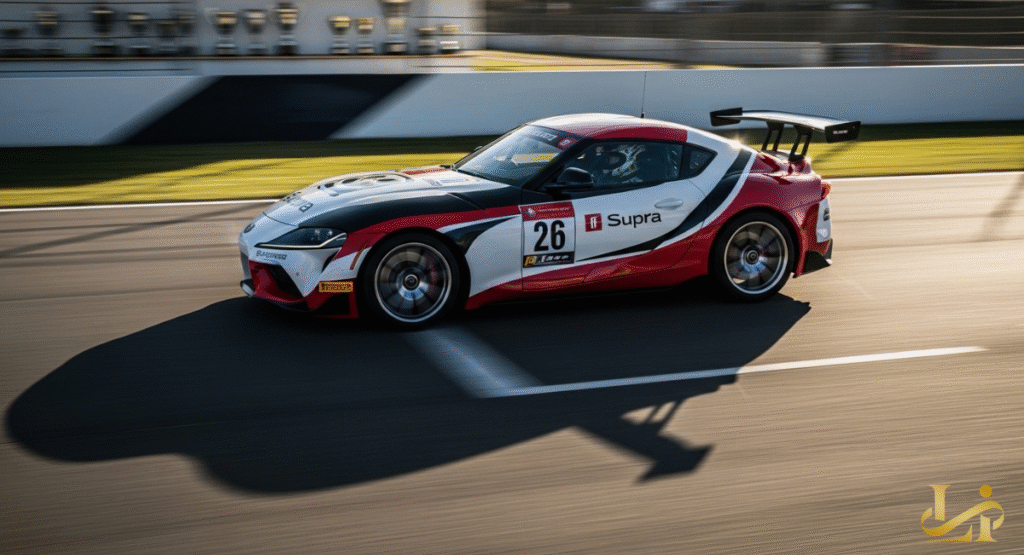
Racing has always been part of the Toyota Supra identity. Earlier generations competed in GT championships, while modern versions continue to appear in drifting and grassroots motorsport events. The fourth-generation model, in particular, played a significant role in shaping the performance image of the Toyota Supra worldwide.
Although annual sales numbers fluctuate, enthusiasm for the badge remains steady. Online auctions and collector markets show sustained demand for older models, while the current Toyota Supra maintains a loyal following among performance enthusiasts.
Toyota Supra Competitors & Similar Vehicles
The 2026 Toyota Supra faces competition from several well-known sports cars. Some rivals emphasize raw power, while others focus on lightweight handling or everyday usability.
| Model | Starting Price | Power | Character |
|---|---|---|---|
| Toyota Supra | ~$45K | Up to 382 hp | Balanced, refined |
| BMW M2 | ~$63K | 453 hp | Aggressive, track-ready |
| Porsche 718 Cayman | ~$70K | 300+ hp | Precision-focused |
| Corvette C8 | ~$68K | 490 hp | Mid-engine power |
Within this group, the Toyota Supra positions itself as a well-rounded performer. It may not lead every category, but it blends speed, style, and practicality in a way that appeals to a wide range of drivers.
Is the Toyota Supra Worth Buying in 2026?

For 2026, the Toyota Supra continues to deliver strong acceleration and impressive cornering ability. The chassis feels tight and responsive, and while some drivers may want slightly more steering feedback, the overall driving experience remains engaging.
If your expectations are rooted in pure 1990s nostalgia, you may compare it closely to earlier generations. However, viewed as a modern sports coupe, the Toyota Supra offers serious performance, everyday comfort, and proven engineering.
Final Thoughts on the Toyota Supra
The Toyota Supra has evolved significantly since its introduction, yet it still carries the spirit that made it famous. It balances heritage with modern engineering and continues to attract drivers who appreciate rear-wheel-drive performance.
For U.S. buyers seeking a sports car that combines speed, reliability, and daily usability, the Toyota Supra remains a compelling and relevant choice in 2026.
FAQs
Why is Supra being discontinued?
Toyota has indicated shifting market priorities toward electrification, which may affect long-term production plans.
How much will the 2026 Toyota Supra cost?
The 2026 Toyota Supra is expected to start in the mid-$40,000 range, with higher trims exceeding $50,000.
Is a Toyota Supra a good car?
Yes, the Toyota Supra offers strong performance, balanced handling, and reasonable practicality for a sports coupe.
Why were Supras illegal?
Certain imported older models faced registration challenges due to emissions and import rules, but they were never broadly illegal.
Is the new Supra just a BMW Z4?
While the Toyota Supra shares its platform with the BMW Z4, Toyota tunes the suspension and driving dynamics to create a distinct experience.

I write about the world of luxury, from timeless style to premium living, inspiring readers to embrace elegance in everyday life.