The Ford GT Mk IV just stunned fans by clocking an impressive lap time at the Nürburgring Nordschleife. This track-only powerhouse ran a 6:15.997, making it the third-fastest car ever around the legendary Green Hell. Driven by Frédéric Vervisch, the limited-run Ford GT combines an 800-HP EcoBoost V-6, race-spec gearbox, and lightweight carbon-fiber body to dominate both corners and straights.
Car fans everywhere are buzzing about the Ford GT Mk IV, which takes on top hypercars like the Mercedes-AMG One and proves that American engineering can still shine on extreme tracks.
GT Mk IV Nürburgring Lap Record
The Ford GT Mk IV’s 6:15.997 lap cements its place as the third-fastest car at the Nürburgring, a track famous for pushing both driver and machine to the limit. It beats notable hypercars like the Xiaomi SU7 Ultra Prototype and Lotus Evija, though the Porsche 919 Hybrid Evo and Volkswagen ID.R Pikes Peak are still quicker overall. Among gas-powered cars, however, the Ford GT Mk IV stands out thanks to its 800-HP engine and aerodynamic carbon-fiber body.
With only 67 built since 2023, the Ford GT Mk IV’s limited-production status makes this record even more impressive. Features like a stretched wheelbase and race-spec gearbox give the car exceptional cornering stability and top-end speed, while the exclusivity adds to its track legend.
Lap Times Table:
| Car Model | Lap Time | Type | Notes |
|---|---|---|---|
| Porsche 919 Hybrid Evo | 5:19.546 | Hybrid | Prototype |
| Volkswagen ID.R Pikes Peak | 6:05.336 | Electric | All-electric |
| Ford GT Mk IV | 6:15.997 | Gas | Track-only car |
| Xiaomi SU7 Ultra Prototype | 6:22.091 | Prototype | Pre-production |
| Lotus Evija Hypercar | 6:24.047 | Electric | Hypercar |
Detailed Lap Performance Analysis
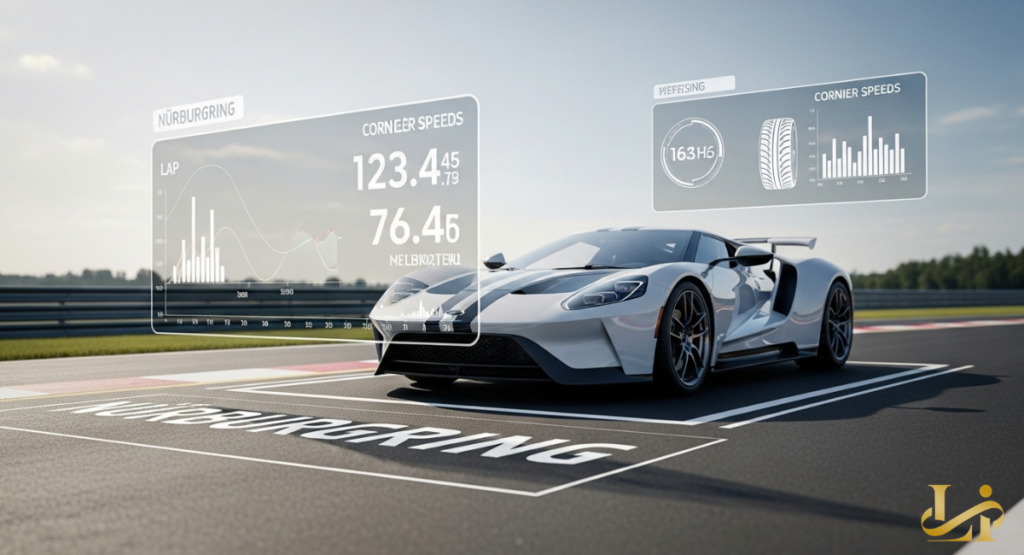
Looking at sector times and speed data, it’s clear how Frédéric Vervisch mastered the twists and turns of the Green Hell. The Ford GT Mk IV’s twin-turbo V-6 delivers steady power on the straights, while the race-spec gearbox shifts quickly through tight corners. Downforce from the carbon-fiber body keeps the car glued to every bend, allowing maximum cornering speed.
The car’s consistent lap times show a perfect mix of smart engineering and skilled driving. In braking zones, especially after high-speed stretches, the Ford GT Mk IV maintains stability thanks to its aerodynamic efficiency. Over the 12.9-mile track, it proved why it outperforms even other limited-production Ford GT models.
Sector Performance Table:
| Sector | Speed (mph) | Notes |
|---|---|---|
| Sector 1 | 178 | High-speed straight |
| Sector 2 | 92 | Tight corners |
| Sector 3 | 150 | Elevation change |
| Sector 4 | 165 | Final straight |
Full-Length Nürburgring Replay Coverage
Watching full-length laps shows the Ford GT Mk IV’s handling and strategic racing lines in action. Each lap demonstrates how the car keeps speed through demanding sections, often outperforming hybrid and electric rivals like the Volkswagen ID.R and Lotus Evija.
The replay also highlights why track-only cars like the Ford GT Mk IV record different times than production vehicles such as the Mercedes-AMG One. With steep climbs and tight turns, the Nordschleife tests both driver skill and car design, which helps explain how the Ford GT Mk IV achieved the third-fastest lap ever.
Track Testing and Driver Insights
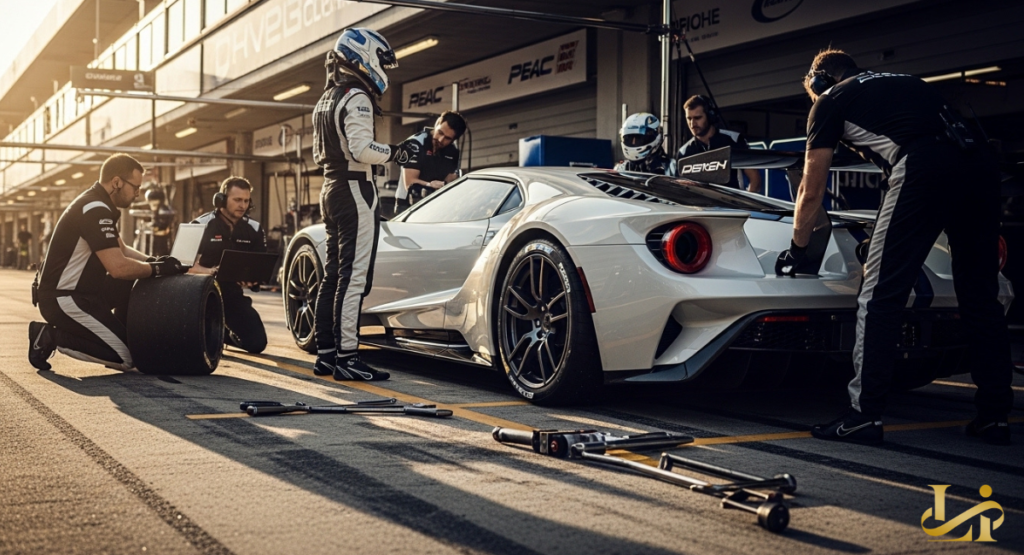
Frédéric Vervisch, Ford Racing factory driver, explains that controlling the Ford GT Mk IV requires understanding its 800-HP output and gearbox quirks. Test sessions revealed how the carbon-fiber body channels airflow for high-speed stability and why hand-built track cars often edge out mass-produced hypercars.
Experts note that the GT Mk IV handles well in both wet and dry conditions, thanks to its long wheelbase and powerful EcoBoost V-6. Its responsive steering allows drivers to safely push limits, crucial for setting lap records at the Nürburgring.
Upcoming Hypercar and GT Tests
Ford continues to test hypercars and develop the GT Mk IV platform. Upcoming trials include the Genesis hypercar debut and new GT3 entries, all aiming to challenge or beat the GT Mk IV’s record.
These tests focus on improving aerodynamics, engine tuning, and suspension setups, helping both track-only prototypes and future production models learn from the GT Mk IV’s record-breaking performance.
Team Updates and Driver News
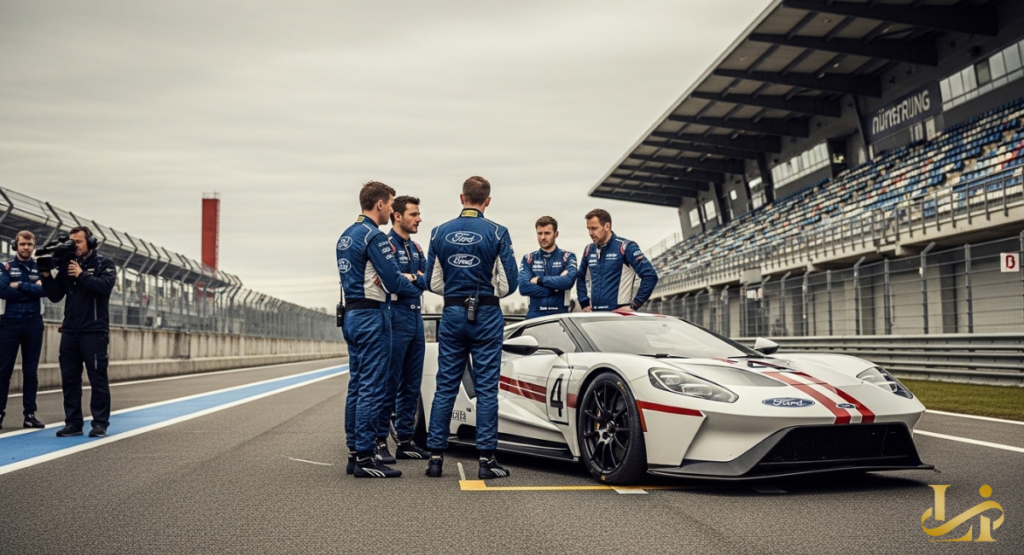
The Ford Racing team has added drivers like Pumpelly, Andlauer, Masson, McDonald, and Stroll, all contributing insights into track strategy. Strategic driver rotations let Ford optimize the GT Mk IV for every lap, taking tire wear, weather, and other factors into account. Fans gain a glimpse into the teamwork behind keeping these hand-built cars at peak performance.
Legacy and Historical Context
The GT Mk IV proves that prototype and pre-production cars still matter in today’s racing world. Legendary figures like Bob Tullius helped shape motorsport history, and Ford now joins this elite lineage with achievements at the Green Hell.
A fast lap at the Nürburgring has become a badge of honor, showing off both engineering skill and driver talent. The GT Mk IV adds to the legacy of hand-built track cars, showing that clever engineering and a track-focused design can outpace even hybrid and electric competition.
Test Drives of Other High-Performance Cars
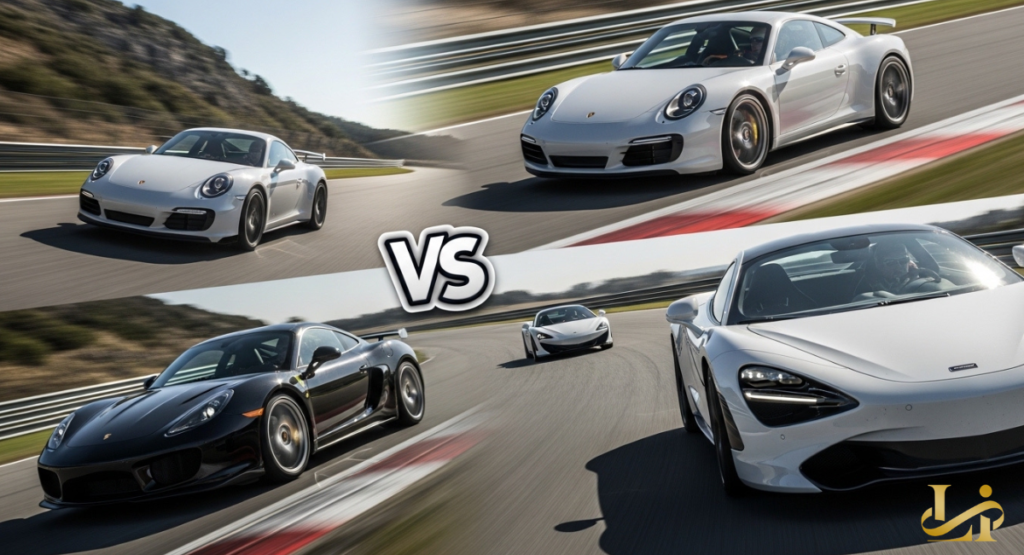
To appreciate the GT Mk IV, it helps to compare it with cars like the Aston Martin Vantage Roadster, Ford Mustang Dark Horse, BMW M2, and Chevrolet Corvette Stingray Convertible. While these cars are impressive on their own, none match the GT Mk IV’s combination of turbo V-6 power, race gearbox, and carbon-fiber construction.
Comparison Table:
| Car Model | Horsepower | 0-60 mph | Lap Time |
|---|---|---|---|
| Ford GT Mk IV | 800 HP | 2.7 sec | 6:15.997 |
| Aston Martin Vantage Roadster | 510 HP | 3.5 sec | 7:05 |
| Ford Mustang Dark Horse | 500 HP | 4.0 sec | 7:15 |
| BMW M2 | 480 HP | 4.2 sec | 7:20 |
| Chevrolet Corvette Stingray Convertible | 495 HP | 3.8 sec | 7:10 |
This comparison shows why the GT Mk IV stands out as a track-only marvel capable of challenging hypercars at the Nürburgring. Its limited-production status and hand-built engineering ensure it remains a record-setting machine in modern motorsport.
FAQs
What is the fastest Ford around the Nürburgring?
The Ford GT Mk IV is currently the fastest Ford, with a 6:15.997 lap.
What was the Ford GT Nürburgring time?
6 minutes 15.997 seconds, making it the third-fastest car overall.
What is the fastest Nürburgring lap ever?
The Porsche 919 Hybrid Evo holds the fastest lap at 5:19.546.
How fast was Ken Miles going when he died?
Ken Miles was reportedly driving around 140–150 mph during a testing crash at Riverside in 1966.
Is a 5.0 Mustang faster than a Corvette?
In general, a 5.0 Mustang is slower than modern Corvettes due to differences in aerodynamics, power, and handling.

I write about the world of luxury, from timeless style to premium living, inspiring readers to embrace elegance in everyday life.